
Doodling might be exactly what your brain needs
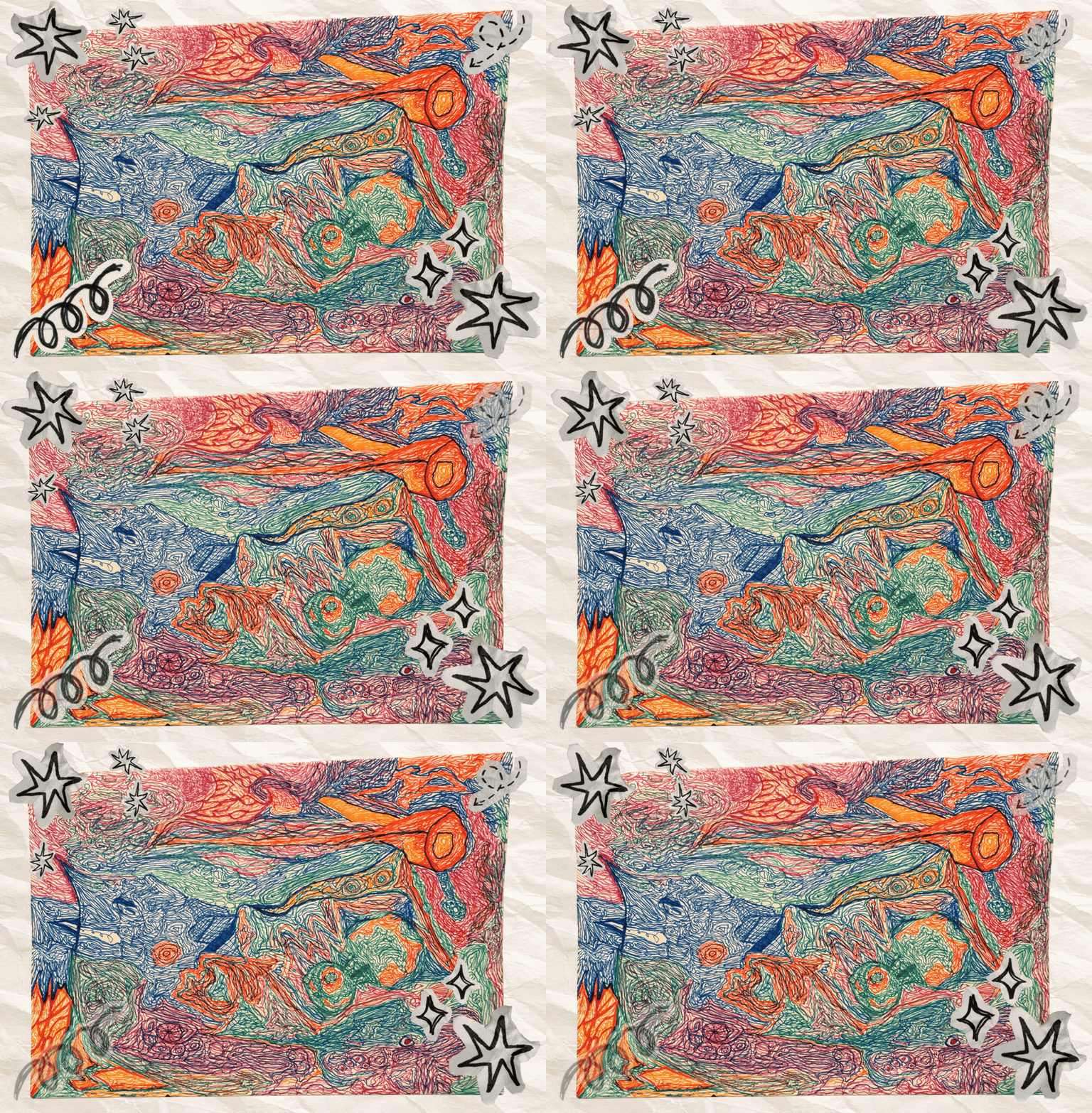
Illustration by Milo (16)
by Summer Tao
During my teens, teachers regularly told me off for doodling during lectures, along with other habits that helped me pay attention, like bouncing my knee or rocking my body. When I reached university, my grades and enthusiasm for class shot skyward. There were plenty of reasons, but being able to move my body alongside my mind was one of the contributors. Later I received an autism assessment and learned about “stimming,” and everything clicked. This girl's mind depends on her body being occupied too.
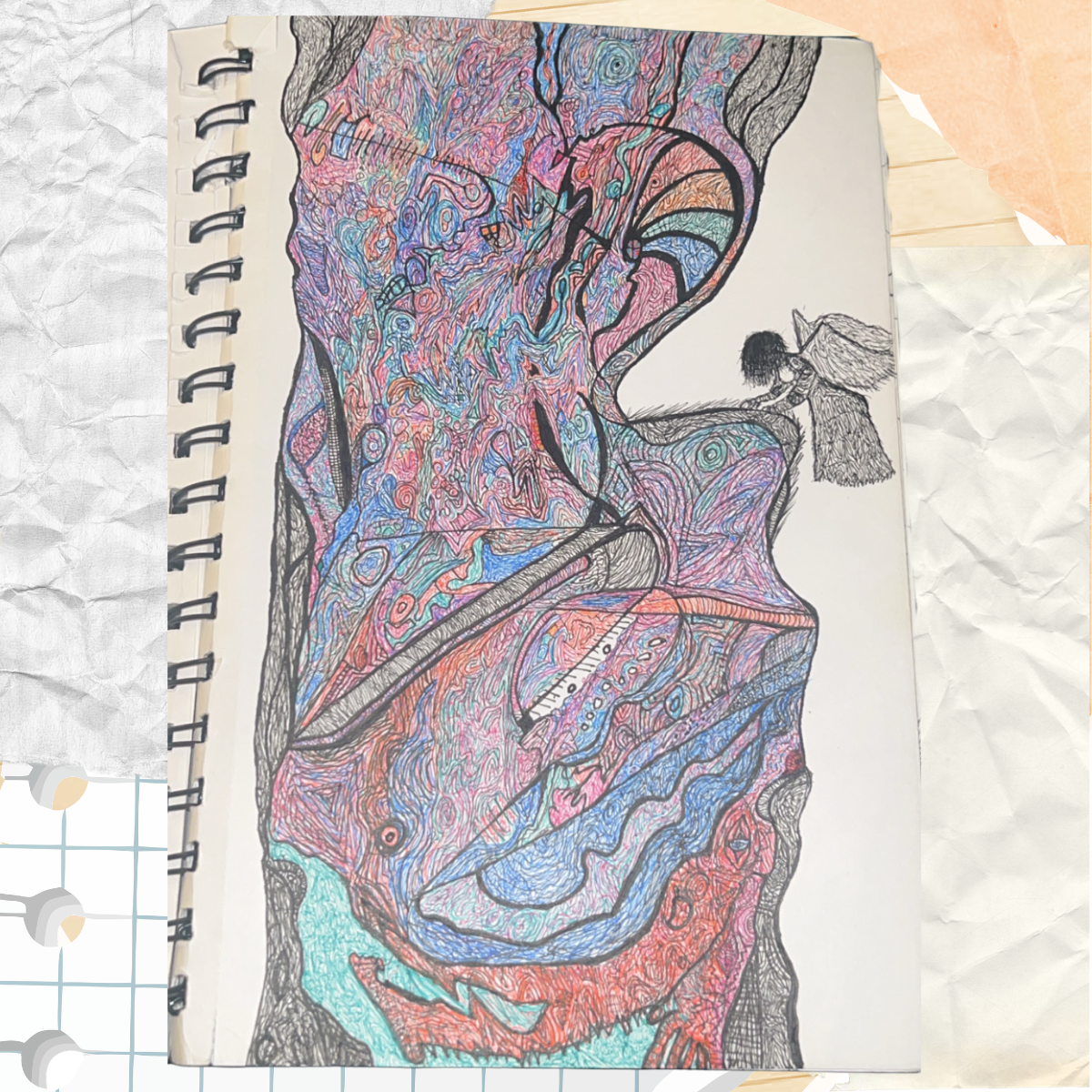
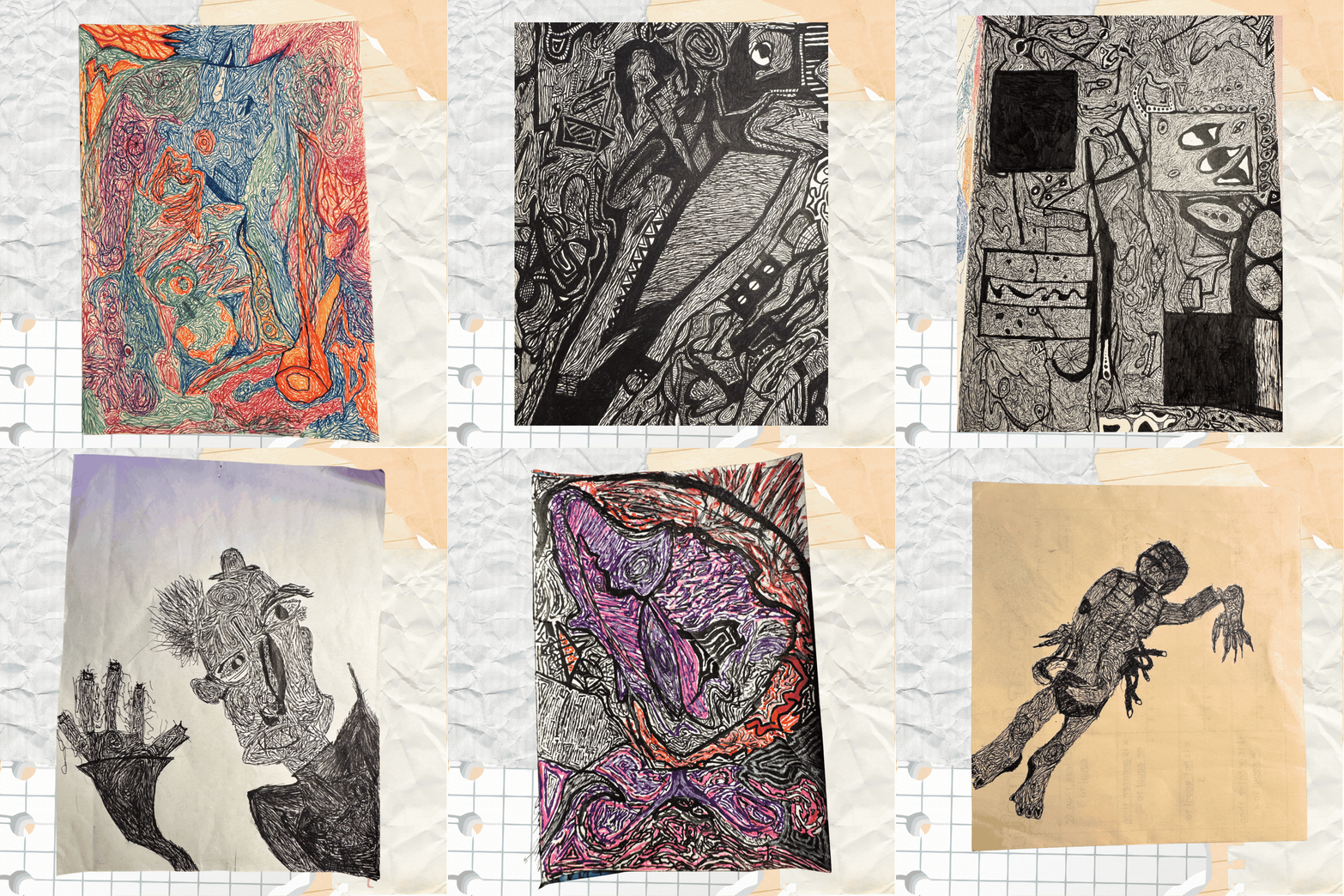
I'm certainly not the only neurodivergent mind who feels this way. Milo is 16 years old and an avid doodler. It’s both something he enjoys and something his mom fully supports as a creative way to manage ADHD symptoms. He says it’s “calming and helps me sit through school, which is usually pretty boring. My drawings take a long time, so I can keep working on the same one. Doodling’s a great way to be creative and it’s especially cool if you can listen to music while you’re doing it.”
That relief is backed by science. Psychology Today explains that a study “found coloring, doodling, and free drawing activated the prefrontal cortex, the dopamine-rich brain area affected in ADHD, indicating a positive effect of art on the study participants.”
Edge Foundation reinforces the same conclusion: “Several studies have shown that physical activity, even small movements like doodling, can increase focus in children with ADHD by affecting the levels of dopamine in certain brain areas, similar to stimulant medications.”
Illustration by Milo (16)
Doodling used to be the scourge of attentive classrooms. It was mischaracterized as “unfocused” or “disrespectful” behavior. Schoolteachers sought to stamp it out in their highly stratified and structured classrooms with little thought given to why someone doodles. The stigma against what is essentially “drawing at the wrong place and time” isn't just confined to schools. A South Korean lawmaker issued an apology in 2025 for sketching a gorilla from reference during a National Assembly audit.
This reputation has begun changing, outside the halls of government, at least. People now advocate for idle drawing during otherwise formal activities. Even my former nemesis, the schoolteacher, is coming around to the potential benefits of doodling. Like any cognitive field, the benefits aren't easy to pin down, but the evidence is growing. A few widely disseminated studies noted an improvement in memory and concentration among those who doodled. Better yet, a 2025 review of the literature also found evidence of a positive effect on several mental domains including concentration, memory, and emotions. Understandably, the study authors also noted how difficult it was to study mental well-being and art.
That's what doodling was to me. Snippets of art that were soothing to my brain which was weighed down by cognitive load. Registered Clinical Counsellor Nilou Esmaeilpour calls doodling a "gentle, repetitive sensory input, which is exactly what many people seek through stimming," that, "gives the brain just enough activity to stay grounded. It can actually help maintain focus by preventing mental drift or anxiety from taking over."
Doodling also keys into different forms of learning. It's now understood that people process information in different ways. This is critical in settings where people need to be engaged over a period of time. Licensed Clinical Social Worker Madison McCullough says, "Some people have an easier time processing visually than they do verbally or in other ways. I have had a number of clients who doodle during therapy sessions. Doodling helps them focus on what we're talking about, as well as provide a bit of distance from some of the heavier things that might come up in session.”
McCullough adds, “The content of one's doodling can also reveal thoughts and feelings that are otherwise difficult to express, thereby offering meaningful opportunities to cultivate self-knowledge and insight."
Illustration by Milo (16)
We're still some distance away from knowing how doodling impacts well-being and cognition, but the move toward its acceptance has snowballed for a decade. My teenage self would be happy to hear people calling for the active use of doodling and the arts to supplement learning.
Nilou says, "Creating a consistent context using the same notebook, pen, or style can help the brain associate doodling with focus and calm. Some people benefit from repeating certain shapes or patterns that feel especially regulating to them. Most importantly, treating doodling as a support tool rather than a bad habit allows it to work with attention instead of against it."
This tip would go great for people who doodle for stress relief. It's applicable whether you're getting home from an outing or sitting in a long meeting. Doodling as a protective measure against the world's many stressors definitely appeals to me even years after graduation.
Madison suggests a more reflective approach: "[Notice] when you are most likely to doodle and what it does for you in that moment. Are you more likely to do it when being spoken to, or needing to listen? Does it help you focus? In looking back at your doodles, are there any themes or patterns you notice? Gathering this information could help to prepare you to be able to doodle in moments when you are most likely to feel supported by it, and to remember that it's an option that's available to you. It's important to validate your doodling process if it's something that you find useful and that is additive in your life."
Madison's call to validate and promote doodling in your life is lovely to read as someone who was maligned for it as a child. Done well, doodling is unintrusive to others while being a supportive or even necessary part of the doodler's cognitive process. If nothing else, doodling can be an outlet for movement that might take more disruptive forms without pencil and paper. And isn't the goal of feeling comforted and cared-for worthy for everyone?
Check out some of these doodle artists for inspiration, solidarity, and good company. Doodling is a real, legitimate art form, so it’s great to visit in person if possible, but exploring their work online is a solid option too.
Mr. Doodle — British viral doodle artist Sam Cox, who once covered an entire 12-room mansion in his work
Red Bull Doodle Art — an international doodle competition open to anyone
The Doodle Art Project — a community-built movement proving art can be made anywhere, by anyone
A Doodle Diary — architect John Kirksey's 50+ years of meeting doodles, on exhibit at Architecture Center Houston
Doodles by Renaissance Masters and Modern Artists — “Gribouillage / Scarabocchio” exhibition celebrates six centuries of scribbles at the Beaux-Arts de Paris
Summer Tao has a Masters in Psychology and is currently pursuing a PhD focused on LGBTQ+ healthcare in South Africa. Summer’s writing often covers topics including queer relationships, sexual health, tabletop gaming, and humor.
Milo is a 16-year-old artist based in Austin, Texas, whose creative instincts are fueled by comics, music, football, and chicken wings.
your contribution is tax-deductible
KEEP EXPLORING:Unmasking truth and healing through art
Illustration by Sasha Bakinovskaja