
Neuroplastic parenting: Trusting children to grow and learn without punishment
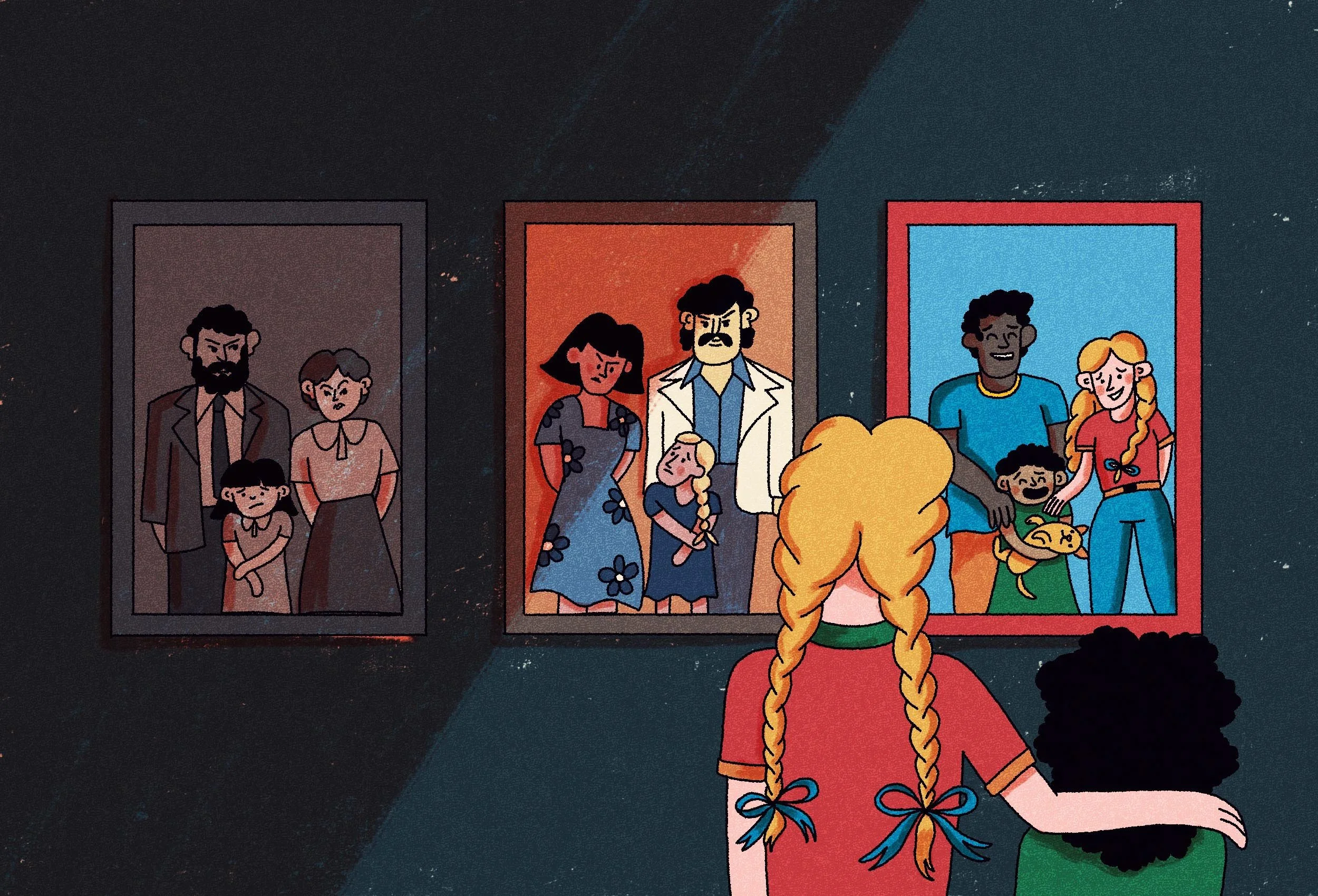
I wish I’d trusted my kids from the beginning.
Turns out, the trust I lacked was actually in myself. Deep down, hindsight taught me, I actually did know the way forward–it was just a matter of perspective.
How we see ourselves, how we see each other, and how we perceive our interactions can all be powerful forces in shaping how we grow together. The understanding I had for myself—one that kept me locked in cycles of fear and judgment—was more limiting than I realized. But rewiring my approach to parenting began to open doors to better understanding of my children, and of myself.
From the time I first learned I was pregnant with my son, I was determined to learn everything I could to give them the childhood I didn’t have. I frequently read books, gathered research, and dove into parenting education courses. When my son was six or seven, and my daughter was a toddler, I read Unconditional Parenting: Moving From Rewards and Punishments to Love and Reason by Alfie Kohn.
Finally, I’d found a resource for the parent I wanted to be—one breaking all the social norms I’d been struggling against. But, as with any journey, it became apparent I would need to retrain my own brain to help theirs flourish.

I already knew in my gut that punishing my kids was wrong, but implementing the things I learned in this book (and many others) was more difficult than I was prepared for. I often fell back on old habits—good ol’ threats and consequences – when I didn’t feel like my kids were “doing what they were told.” Why are these kids acting like this? Why is this happening? Why can’t they just behave? How do I actually implement these techniques? The whole world is watching me fail, and my kids are going to hate me.
My inner monologue is important here. Over the years, I’ve come to recognize that voice as a representation of the pain from my own childhood. My fear of judgment was acting as a barrier to trusting my kids.
Listening to our inner voice is crucial to understanding how deeply our perceptions of ourselves and others can shape our behaviors. It wasn’t just about my emotional reactions; it was about how I had learned to perceive those emotions and what they meant about my parenting. Rewiring my brain meant not only calming those judgments but actively changing my perception of myself as a parent. And in doing so, I began to trust my children in a way I never thought possible.

One particular instance really triggered me as a mom. We were leaving for a play date with new friends. I was so desperately lonely and in need of a friend that I fixated on getting to this playdate right away. We were in South Louisiana, and it began pouring down rain just as we walked out of our apartment door. The kids were ecstatic and bolted to the swingset to experience the innocent joy of swinging in the rain. They were not in danger, we weren’t late for anything, and they were having so much fun. I, on the other hand, was raging inside. I didn’t understand why that rage was there, but I saw my kids as being defiant, and I felt so angry. When I took some time to reflect, I realized how much of my childhood was spent in opposition to my parents, and how that fed my inner voice. I needed to rewire my brain to connect with my kids rather than see them as the opposition.
Rewiring my brain was surprisingly not impossible. An article by Courtney E. Akerman, MA, says, “We rewire our brains to adapt to new circumstances. This happens on a daily basis, but it’s also something that we can encourage and stimulate.”
My kids didn’t need to “behave” (according to my preconceived notions of what a child should be).
What they needed was trust: I needed to trust they would grow up to be their own people without expecting obedience and force-feeding them empathy or kindness.
In her book Brain-Body Parenting: How to Stop Managing Behavior and Start Raising Joyful, Resilient Kids, child psychologist Dr. Mona Delahooke talks about moving away from managing behaviors and focusing on having relationships with your children. I was raised by an authoritarian father and a mother who struggled with boundaries, which made for a very confusing childhood. I didn’t have a safe relationship with my parents, and I was never taught good communication. So, I was learning from scratch. Delahooke said, “As a culture, we are extremely judgmental about behavior, especially of children.” Society told me I needed to discipline my kids, to keep them in line, and that I was always being judged as a mother based on their behavior. I was trying to go against a very embedded social norm, but I was starting to realize that I wasn’t so conditioned that I couldn’t change.
Making that change required a shift in my view of what “good behavior” really meant. I had to look inward, challenge the old scripts I’d internalized, and consciously adjust my approach. This is where neuroplasticity comes into play: our brains are always adapting, and just as I had taught my children, it was important to think and react earnestly, I could also learn to see them — and myself — differently. I could reframe things, reshape my brain’s pathways, and expand the possibilities of how our relationship could be grounded in trust, not control.
In fact, my brain—most brains—are designed to learn. In the article How Neuroplasticity Works, Kendra Cherry, MSEd, writes, “Newer research has revealed that the brain never stops changing in response to learning.”
A lot of people use consequences to assert boundaries, but I wanted to model boundaries. I started by listening to my kids and respecting theirs. I didn’t make them look me in the eye, knocked before entering their rooms, and always got their consent before making decisions that involved them. I started paying attention to how they responded to me, their body language, and when they told me things. Most importantly, I believed them.
In the interest of learning, or relearning, and making new neural pathways, I told myself to get curious. Reactivity wasn’t going to help any of us. If a child told me a lie, I asked why, but without judgment. I asked, “Why didn’t you feel safe telling me the truth? How can I make this space safer for you to be honest with me?” I learned not to take things personally and be more interested in how my children were being impacted by their environment, as well as becoming self-aware of my own behaviors.
As Akilah Richards, founder of Raising Free People Network and author of Raising Free People: Unschooling as Liberation and Healing Work, says, we need to “challenge privilege and power in our relationships with children.” It took some time for my oldest to trust me, but every time I reinforced my promise not to punish him for his mistakes—focusing instead on listening and connecting sans judgement— our connection strengthened. I watched as he opened up, relaxed, and became braver about telling me how he was feeling.
One day, when he was about 11, I was tripping on those old habits and trying to insist he unload the dishwasher. I wasn’t paying attention to my tone or body language, and my son told me he was feeling cornered and nervous. I stopped talking and realized I was twice his size, standing over him, and he was in the corner of the kitchen with my body blocking his only possible exit. I immediately switched our positions, lowered my voice, and my body so we were eye level. I wasn’t even worried about getting him to unload the dishwasher anymore. I let it go. This kid had felt safe communicating how my behavior was affecting him, something I’d never felt safe expressing as a child. I started communicating with him in return, letting him know I could really just use some help, explaining my perspective that it’s overwhelming to load and unload the dishwasher by myself. To this day, he unloads the dishwasher without resentment or a fight, because we’re working together. We’re helping each other.
In his contribution to “Trust Kids! Stories on Youth Autonomy and Confronting Adult Supremacy,” Antonio Buehler (cofounder of Abrome, a Self-Directed Education Community) said, “The first step to changing the context can be acknowledging that conventional parenting and schooling are nothing more than harmful belief systems that have been conditioned within us, and that opting out is a possibility.” So, we opted out. Today, my children and I live a very peaceful life. We have our moods occasionally, but we treat each other with respect. No one is trying to avoid some assigned consequence. We discuss things, and our actions are organically empathetic towards each other. I trust them to make their own decisions, and I trust them to learn from their mistakes. I can communicate how I’m being affected by their actions or words and they can do the same, without a desire to punish each other. Sibling rivalry is rarely a thing in my home now. They are concerned for their own safety as much as I am. My teenager answers his phone when I want to check in, and my daughter plans out how she will stay safe and be able to reach me when she’s not in my care. They both have no problem letting me know how something I say or do makes them feel when I make mistakes, which helps me grow.
We’re growing together. And we grow from a place of trust, self-awareness, and openness. I’ve learned that how we perceive the world around us—and how we choose to interpret our children’s behaviors—is as much a reflection of our own minds as it is of theirs. By reshaping how I view myself as a parent and how I view them, we’ve all learned to better regulate our emotions and behaviors in healthier, more compassionate ways. And in doing so, we’ve also created a whole new understanding of relationships in general. Instead of guardrails put up by others, we’re making an expanding space for understanding and connection—with each other, with the outside world, and maybe most importantly, with ourselves.
Continue learning about adaptive parenting and the balance of trust.
Digital communication tools helped me parent my two-home kids and find creative ways to stay connected and nurture trust across households
Empathy in children’s media matters—for kids and adults, and why the stories we share shape compassion in children, and in ourselves
Somatic mindfulness: Rollerskating helped Melonie to trust herself while learning something new
Listening with your whole body and learning to hear beyond words, and respond with presence
Living with the legacy of abusive parents and how to acknowledge, understand the impact, and find a way to make peace with the past
Annette Walters is a freelance writer and MBA student residing in Austin, TX, with her two kids. She strives to use her experience, education, and research skills to dig deeper into topics she feels passionately about in an effort to build community and foster connection.
Sonny Ross is an Illustrator based in the UK working in editorial, conceptual, lifestyle, food, and children's books for the New York Times, Washington Post, Guardian, BBC, and many more.