
Rewiring a pharmacist’s brain: Discovering the therapeutic potential of psychedelics
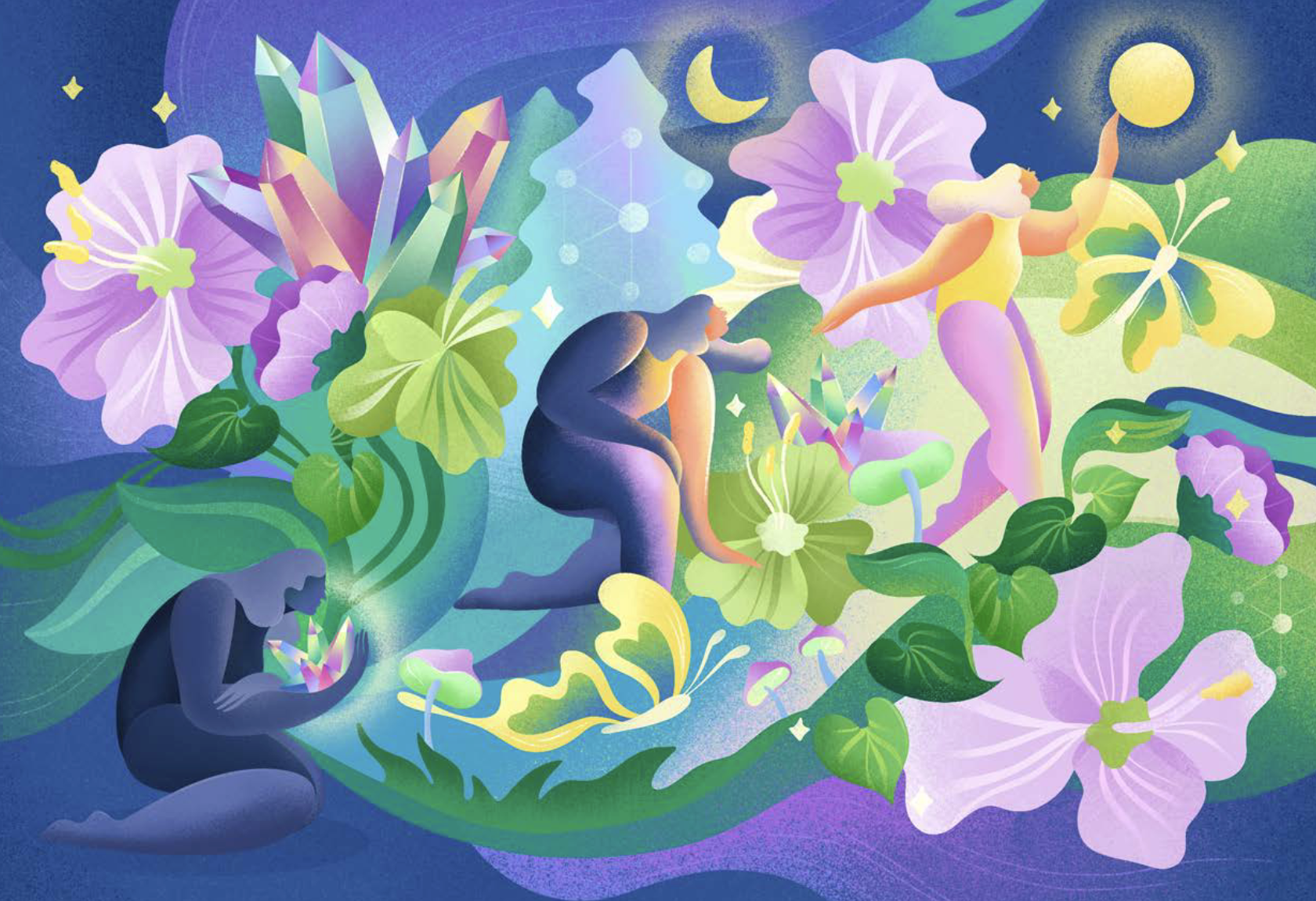
My employer wouldn’t let me have a plant at work. So I quit.
For over a decade, I went to work dutifully, proud to wear my white lab coat and help people who trusted me with their health. Young mothers looked to me to show them how to dose antibiotics to their little ones. Seniors sought my advice when they couldn’t afford their monthly medications. I embraced my profession and the comfortable salary that came with it. Over the years, I got to know my regular patients and their families, which was probably the best part about being a pharmacist.
As a late-thirty-something, I discovered I am a highly sensitive person (HSP), which means I feel things deeply. It’s why I remember details and get a “vibe” quickly about places or people. I’m empathetic, compassionate, and I like to help others, which are some of the reasons I became a pharmacist. I’m a good problem solver, and I notice what others miss. I’d say these are important traits for healthcare professionals to have. I also think that our medical-industrial complex exploits these traits in healthcare personnel who have taken oaths to serve others.
What happens when you take an HSP like me and put her in a windowless box for 40 hours a week? You see, I worked in the pharmacy department of a big box store—essentially a box within a box. I’d stand for twelve-hour shifts without being allowed to sit. I’m serious. A colleague was once reprimanded for sitting on a stool because it “decreased productivity.” The fast-paced environment left little time to eat a proper lunch or take many breaks, especially when you were required by law to be in the department at all times as “pharmacist on duty.” The open layout caused a constant cacophony of the overhead music, crying children, and customers shouting things over the counter like, “Hey! Can you tell me where the paper towels are?” It was a three-ring circus most days.
The number of prescriptions coming in from doctors’ offices was impossible to keep up with after cuts to our support staff. All this while most of the directives from Corporate were based on increasing sales volume rather than delivering quality healthcare. We had prescription count goals and vaccine quotas to meet. We who worked in the department dubbed it “McPharmacy,” and doling out pills as fast as possible was not unlike working in fast food. I couldn’t help my patients the way I felt they deserved to be helped. The stressful environment began to wear on me.
I had a recurring dream around that time where I was standing behind the pharmacy counter, looking out at a long line of people waiting for their prescriptions. It was Christmastime, and the people all had this glazed look upon their faces as they leaned against their shopping carts. The fluorescent lights made their skin look sallow—almost like they were zombies. Human in form, but dead inside. As each one made their way to me at the counter, I handed them a crisp white baggie of pills. I woke up feeling an inexplicable guilt. Here I was, not delivering true healthcare or wellness, but medicating the masses.
I wondered in waking life, was I even helping these people, or just participating in a broken healthcare system that kept people sick and dependent on pharmaceuticals?
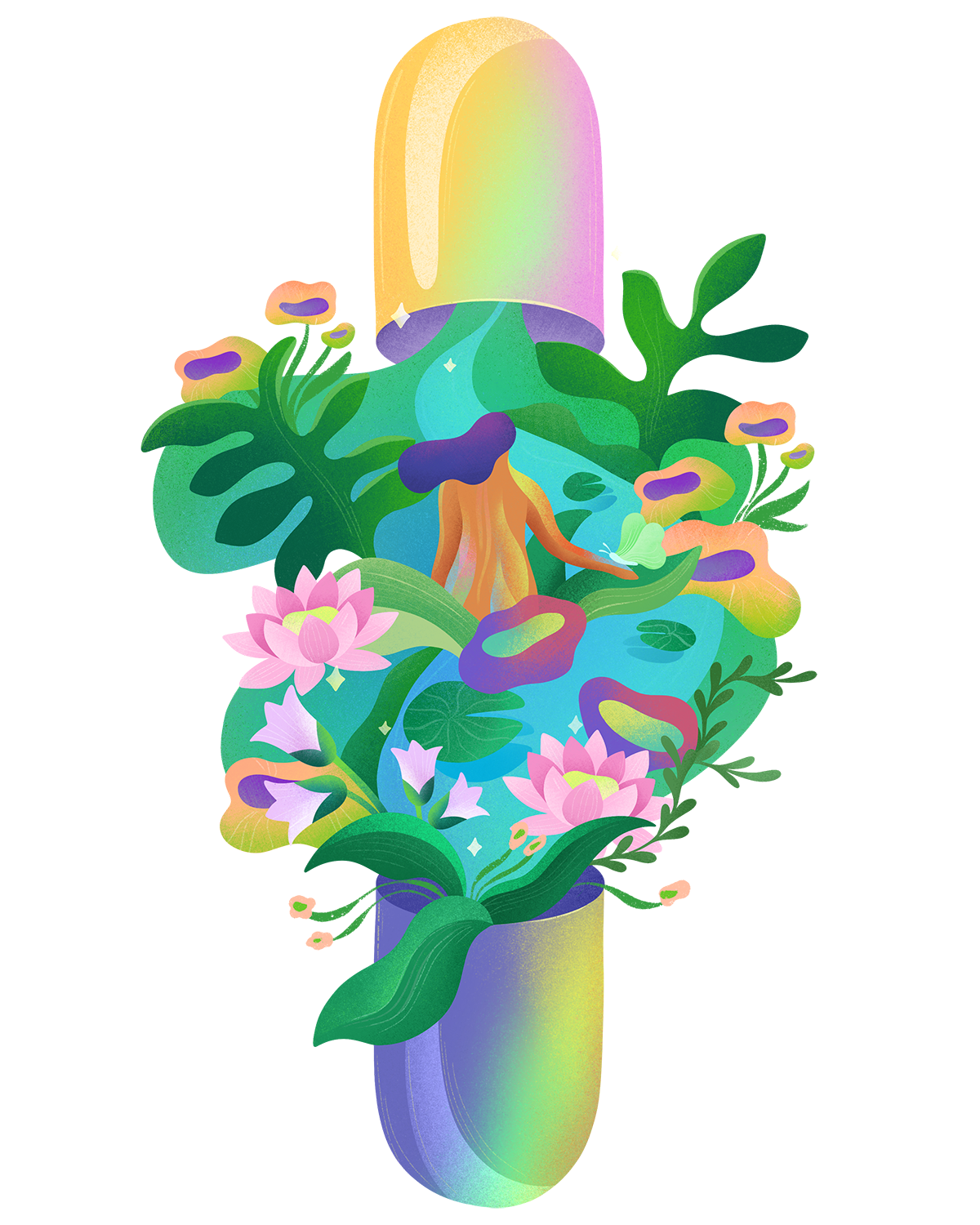
I never envisioned healthcare being like this. In pharmacy school, I thought I’d be able to use my clinical knowledge to help people get better, to educate and empower them to take an active role in their health, not just perpetually medicate them. What I wanted to do was tell people, “There’s got to be a better way.” Something inside was also starting to whisper to me: “There’s got to be a better way.”
One day, in an effort to make the pharmacy department “neat, clean, and organized,” (Corporate actually used the acronym NCO in company communication) we were told we could not have personal effects in the department, including pictures of family, decorative items, or houseplants. I scoffed as I read the emailed policy. I thought, “We can’t sit down for twelve hours, we barely have time to use the restroom, and now we can’t have anything that attempts to brighten up this hellhole?”
Meanwhile, my mental health suffered. I had more than a couple of panic attacks in the bathroom. I’d dry my eyes after crying so hard I felt like throwing up; I stuffed my anxiety down so I could get through my day. Walking into work made my stomach flip and my palms get clammy. My days off were spent at home on the couch, after sending my kids to school, to recover physically and mentally. My marriage suffered. I hated to admit it, but I was clinically depressed – and I did a great job of faking it. My colleagues, my patients, and most of my family never knew. Eventually, I went to my doctor. His answer for me was Prozac and Cognitive Behavioral Therapy.
For a while, medication and therapy helped. The antidepressant made me not care about things as much. Which, I suppose, was the point. I was numbed just enough to continue to hold down my job and not get too riled up at the system I saw crumbling before me. Therapy was helpful to a point, but a lot of time was spent ruminating on the past, and the appointments took up a lot of time that was hard to carve out as a full-time working mom. I knew, having learned about depression in textbooks, that this was the standard of care. And pretty much the best we could do for depression and anxiety.
As a Highly Sensitive Person, I wasn’t satisfied with just numbing myself. I thought about all those sad, sallow people I dreamt about that were not unlike some of my actual patients. I didn’t want to become numb to my life, so I knew I needed to do additional things for my mental health and healing, and develop practices and routines that allowed me to feel vibrant again. I started to go on walks through the woods. I began reading books and listening to podcasts in the self-help space. Yoga and meditation were practices I started to crave because of how they made me feel. I will say, without starting the antidepressant first, I would not have had the motivation or energy to do the things that helped me feel better. Over this period of introspection, therapy, and practicing self-care, I decided that I needed to remove things from my life that drained me, and infuse my life with things that brought me joy. I wasn’t sure what was next for me professionally, but I knew I couldn’t stay at my current job. It was killing my spirit, and it was a big part of my mental health struggles.
My last day of work was a Friday. The following Monday, I saw my doctor to get a medical marijuana card for anxiety. I was curious whether this plant medicine could help me in addition to what I was already doing. I hadn’t been able to try medical marijuana when I was a practicing pharmacist, since I was subject to random drug testing. If I’d tested positive for a federally illegal substance (even though legal in my state), I could have lost my job. I educated myself about my state’s program and figured that taking a precise dose of a regulated, standardized product was a safer option than other, more addictive anti-anxiety options like benzodiazepines. I selected an oral cannabis tincture to be taken when I felt anxiety symptoms. As a mom, I needed to be discreet and to be able to control my dose. This remedy, when used occasionally, was another tool in my toolbox on my mental health journey.
Cannabis then proved to be a “gateway drug” in terms of wanting to deepen my knowledge about other psychoactive plant medicines. After watching the Psychedelica series on the Gaia network and reading Michael Pollan’s How to Change Your Mind, I wanted to learn more. I listened to the Huberman Lab Podcast and a compelling TED Talk by Dr. Burton Tabaac. I dusted off my pharmacist brain and started digging into recently published studies showing how psychedelic drugs affect neuroplasticity – the brain’s ability to restructure or rewire itself when adapting to new challenges and experiences.
I recalled learning about psychedelics—substances like LSD, DMT, and psilocybin—in pharmacy school, but they were sort of lumped together with cannabis as Class I Controlled Substances: illegal and having no medicinal purpose. Their research was, for the most part, prohibited since Richard Nixon’s “war on drugs” in the 1970s. Growing up in the 1980s and 90s, there was a healthy fear instilled about all illicit drugs by my school’s D.A.R.E. program, and a certain TV commercial demonstrated that doing drugs would fry my brain like an egg in a pan.
My research led me to discover that there were clinical applications not just for cannabis, which had been decriminalized and available for medical use in many states, but possibly for psychedelics too.
While cannabis acts on specific receptors in the body’s own endocannabinoid system, psychedelic drugs like psilocybin, for instance, influence the brain’s neural pathways, the connections within the nervous system. A review from Frontiers in Psychiatry summarizes the evidence that psychedelics induce neuroplasticity, making them potential therapeutics for conditions like treatment-resistant depression, anxiety, addiction, and PTSD.
Will the next step in my own healing be to try psychedelics? Maybe. But I haven't just yet because they are not without risk. There are interactions with serotonergic drugs, and they are still illegal in my state. But I see change on the horizon. The states of Oregon and Colorado, for example, have legalized psilocybin therapy and permit patients to go to psilocybin service centers where they take a “trip” in a controlled and comfortable setting with one or more facilitators. I believe over the next several years, we will see expanded uses of psychedelics and changes to the legal and medical policies that govern their use.
For the present time, I’ll keep following my curiosity and write about what I learn. I’ve surprised myself here lately by even getting paid for some of my articles. I’m continuing to create new neural pathways of my own by reading and learning, which is changing my perception of medicine and mental health, not just for my own benefit, but for the benefit of others.
By stepping outside the “box” of the pharmacy, I’m helping educate others by sharing information and dissolving stigmas around mental health and psychedelics.
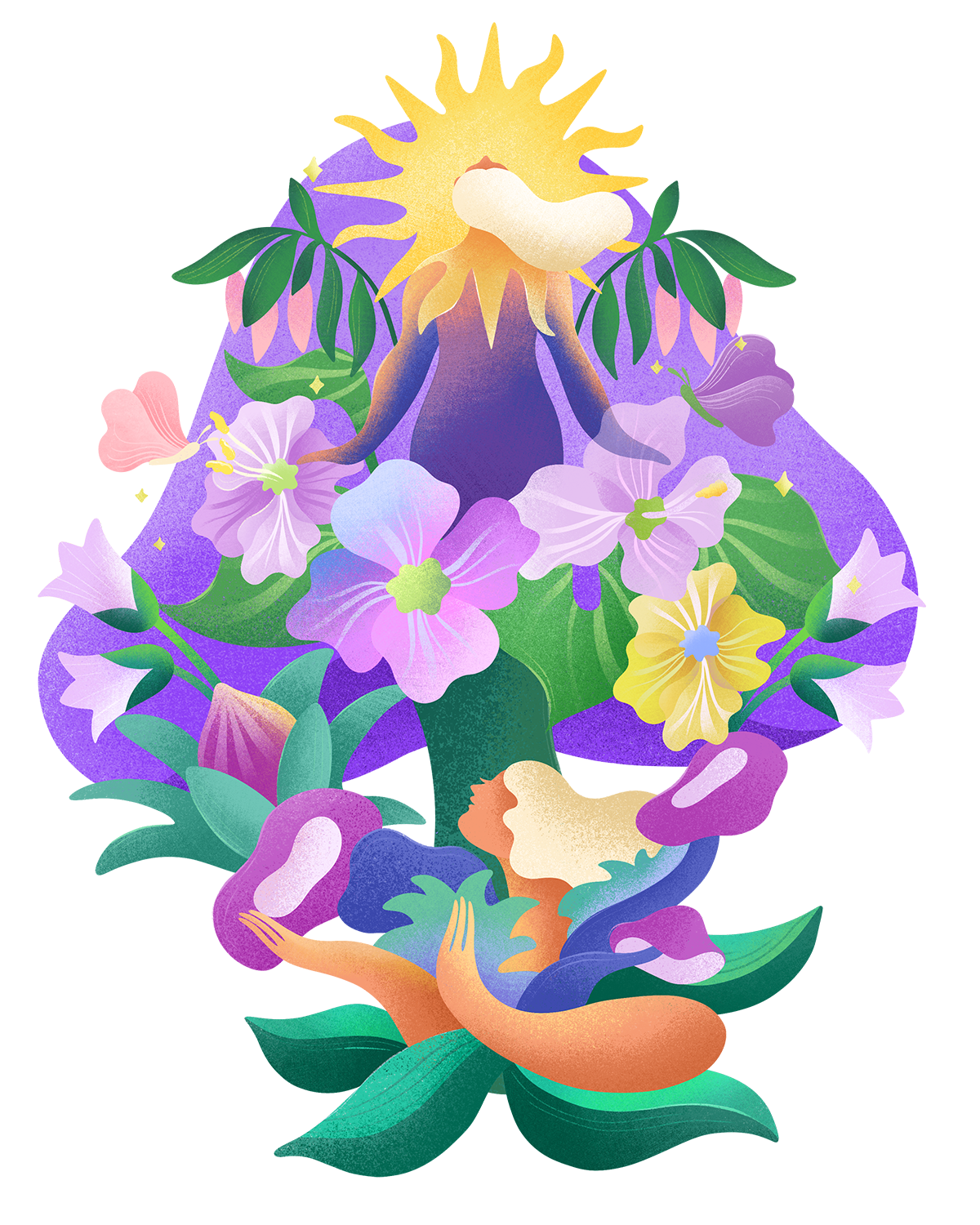
Since I’ve left the big box pharmacy, I’ve realized that maybe the healthcare system isn't necessarily broken. Maybe it's just ripe for change. Maybe I didn’t suffer with my mental health because I was broken. Maybe I’m just a highly sensitive, intuitive person who feels things deeply. Maybe I had to work behind the pharmacy counter so I could understand the struggles of real people who were my patients.
Maybe the reason I wasn’t allowed to have a plant at work was so that, instead, I could spend my time writing about plant-based medicine in a peaceful home office filled with plants.
Dr Sarah Myers is a Pharmacist/Writer thinking outside the pill bottle.
Maggie Stephenson is an illustrator whose work explores the connection between nature, health, and wellness. Her illustrations inspire balance and harmony in everyday life.