When friends break your heart
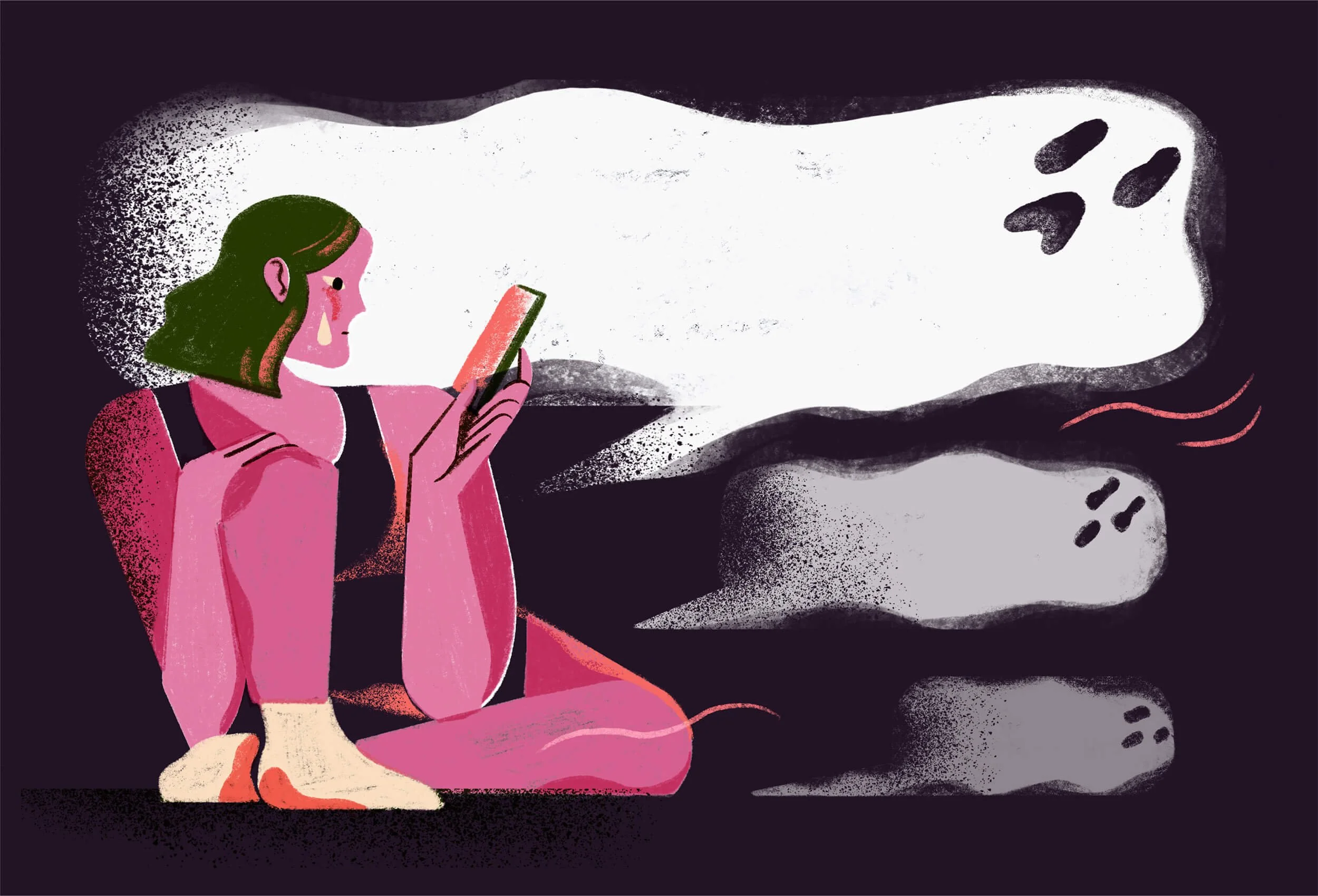
Illustration by Vanessa Lovegrove
By Adeline Chai
At the ripe age of 8, Taylor Swift and High School Musical taught me about romantic love in ways that my conservative Malaysian-Chinese household didn’t. I learned that boys are the ones who break hearts and girls the ones to mend them, and this pas de deux will inevitably suffuse most of my twenties and thirties. Perhaps it was in the small print when I signed up for young adulthood, but no one forewarned me that losing one of my best friends would be my first real adult heartbreak.
Aimee’s exit from my life was jolting. The last time I saw her, we tried saving our friendship over some overpriced baklava. Her doe eyes barely met mine the whole night, but ultimately, her golden skin flushed occasionally and gave her away. If someone had an audio recording of our conversation, it would have been a Fred Again-style loop of the phrases “I’ve tried my best” and “It’s not enough.” After approximately 40 minutes, someone would ask for the bill while another voice slyly remarks that the bread is untouched. I still feel lost on how I perceive that evening, but I knew when I got up from my chair that I was turning the page on an entire life chapter.
Life after that felt like trying to walk again after losing a limb. I have had my fair share of experiences with romantic heartbreak, but none of those boys hurt me more than Aimee. I couldn’t wrap my head around the agony I was feeling at first — partly because I didn’t expect it.
I realized a few months into grieving Aimee that the nuclear composition of a friendship is no different from that of a romantic relationship. You share inside jokes and keep each other’s secrets. Every trinket in your memory box reeks of them after a while, and they eventually become a point of reference for some of the most beautiful memories you have. Friendships are deeply intimate, and it’s no wonder these connections get woven into our identities, knowingly or not.

Familial Relationship Professor at Northern Illinois University, Suzanne Degges-White, PhD, LCPC, NCC, echoes the deep impact friends can have. “They’re our sounding boards, cheerleaders, coaches, and sometimes, stand-in therapists all in one,” she told SELF.
“So when we’ve lost a close companion, we’ve also lost someone we could turn to for support.”
Vanessa Lovegrove
When I lost Aimee, I felt that she took my girlhood with her. We feverishly committed to plans for a shared future when we first became friends: At 30, we’d watch each other walk down the aisle, and at 60, we’d wind up alone with 20 cats and dogs in a sharehouse with purple flowers on the terrace and lemonade stocked from Glebe markets each week. So what happens now that we’ve fallen apart at 22? I was furious. So furious at both myself and Aimee for having given up so easily on everything we shared. But what lay beneath the rage was a deep pain from grieving a future that now simply couldn’t exist, and mostly, a 22-year-old girl who didn’t know the difference between quitting and letting go.
Clinical Psychologist Dr. Arianna Brandolini offers a perspective that I find helpful in understanding all the hurt, anger, and confusion one feels in the aftermath of a platonic heartbreak. “This makes sense; because friendships don’t come with the strings or expectations that keep us tied to a partner (such as marriage or having kids), they are not well defined,” she wrote for Forbes. “If relationships are not well defined, it’s harder to express needs, leaving room for ruptures in trust, disappointment, and a build-up of resentment.”
What makes experiencing platonic loss worse is that our culture doesn’t seem to have any proverbs or rituals to move past it. Unlike romantic love, no amount of chocolate or pros-and-cons lists can fast-track the healing process. I suspect this is due to us growing up with the idea that friendships are infinite.
From kindergarten, we somehow internalize the belief that you become best friends with someone for life once you link your little finger with theirs. It’s a seemingly unbreakable bond. When I lost Aimee, part of me was embarrassed. I saw myself as a failure who couldn’t “keep”’ something that was supposed to last forever. While I was doing my research for this article, I stumbled across a Reddit post that opened with the question, “Are friendship breakups a thing adults go through?” It seems that no one talks about going through a “friendship breakup” as an adult, so while we’re in the middle of one, it can feel pretty lonely.
For any of us feeling this way, we should know that friendship breakups are common despite their underrepresentation in the media. Laura Beddoe, provisional psychologist from The Indigo Project, cited research which found that up to 70% of our platonic connections and 52% of our broader social network will dissipate after seven years. “This means we should be careful not to harbour a sense of guilt that it didn’t work out,” she wrote.
“Changes in our lives mean that friendships organically come and go.”

Vanessa Lovegrove
These changes could include moving to a new city or becoming a parent. These externalities are often inevitable, so rather than acquiring a dangerous amount of self-responsibility for why our friendship(s) ended, we should understand that the answer isn’t always so straightforward. I, for one, couldn’t accept that there wasn’t a tsunami that had swept Aimee under and out of my life. Sometimes, there is egregious backstabbing, but other times, there is no earthquake. A friendship simply wears itself out on a mundane Friday afternoon, and you’ll spend the next ten months wondering why none of you reached out after the last time you met.
In an ideal world, people don’t grow out of loving each other. More often than not, though, in our world, life unfolds differently. We go through different seasons in life, just as everything in nature, but being human means occasionally leaving people behind when they no longer align with our lives. “Focus on supporting and establishing friendships that reflect who you’re becoming and not who you used to be a year or decade ago,” Dr. Degges-White recommends in the SELF story.
Reorienting toward who we’re becoming, rather than who we’ve been, is one way to focus on healing. Not blowing past what happened, but embracing, processing, and moving on to the next phase of our life. Turns out, culture is slowly catching up to that radical act of love. Therapists are naming “friendship grief” as its own category of loss, treating the platonic bond with the same seriousness as a romantic separation. Sometimes more, because there’s no script for it.
Practices like Anchor Therapy and MindShift Psychological Services now offer dedicated support for friendship breakups. Some schools and universities are teaching connection as a learnable skill: how to build (new) friendships, maintain them, and how to grieve them.
For anyone who's never seen their experience reflected back to them, eventhis guide from Healthline on losing a best friend can be a small relief. Even the simple confirmation that what you're feeling is real, and that others have felt it too, gives the wound a name. Even better, there are people trained to help with it. None of that makes it easy. But it makes it less lonely to be in the middle of it.
I still miss Aimee, and I don’t have all the answers. However, since parting ways with her, I have given a few people the room to enter my life. Not to take her place, but to simply show me that there are endless possibilities for experiencing platonic love despite the potential heartache.
If you’re also somewhere in that grief, Dr. Marisa G Franco’s book Platonic is a good place to start. The grief is real. And so are the friends who won’t break your heart.
Adeline Chai is a Sydney-based writer from Malaysia. She is a Social Media and Content Creator at 1 Million Women as well as a freelance writer for international and local publications specialising in music and mental health.
your contribution is tax-deductible
KEEP EXPLORING: