The magic of live performance

Live venues have the power to illuminate some of the best aspects of our human nature. The relationships formed by a performance are ephemeral but, in a lonely world, they are powerful reminders of our essential togetherness.
Live theater has struggled with declining attendance since the global pandemic. Circus performers have found more success on social media in recent years than at live shows. Between 2017 and 2022, attendance at musicals dropped from 17% to 10%, according to the U.S. Census Bureau’s Survey of Public Participation in The Arts. The rising accessibility of digital entertainment has made it simpler and more affordable to watch shows from the couch than in the cabaret.
But if we’re cautiously optimistic, things seem to be looking up. Between April and July 2024, a quarter of U.S. adults attended at least one live, in-person performance and/or art exhibit in the previous month.
If Taylor Swift’s Eras tour taught us anything, it’s that people still crave the feeling of being “in the room where it happens.” Why? Well, maybe because, now more than ever before, it provides us with something we can find nowhere else.
Human togetherness
Dr. Shelley Brunt is an ethnomusicologist who has researched popular music in Australia, New Zealand, and Japan, with a current focus on music as a shared experience between children and their parents. She describes the togetherness of live performance at both an individual scale—“feeling the heat of the person standing next to you, overhearing them sigh when their favorite song comes on”—and a collective scale—“when an audience breaks into collective song.” The moment that thousands of people become united in shared euphoria, Brunt says, “generates a feeling of ‘unisonance’—knowing that you are part of a collective, a community, for that moment in time, and you feel at one with complete strangers in a room.”
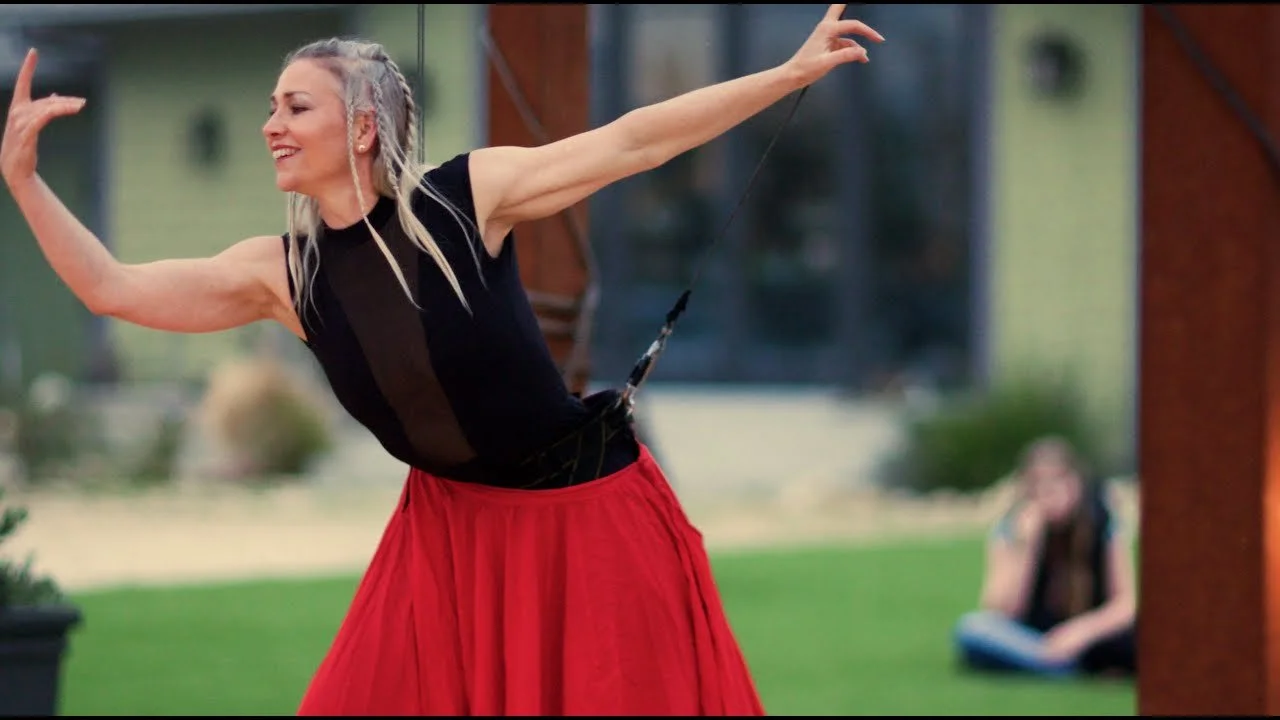
In a live setting, a unique bond also forms between the audience and performer. Danielle Russo, Assistant Professor of the Practice in Performing & Media Arts at Cornell University, drew my attention to the cognitive mechanism at the heart of this relationship: “Seeing and being seen contributes to the making of live performance in and of itself,” explained Russo. “The science of mirror neurons shows that our bodies relate and empathize with each other in the act of witnessing.” When, for example, the moment an engaged audience member sees the performer smile, she will experience her own mirror neurons firing in the same way, even if, in the moment, her face is entirely blank. Despite their differing roles, the audience and the performer come together in a unified experience.
A healthy element of risk
In an age when, thanks to social media, carefully curating one’s image is ubiquitous, it can be liberating to witness something spontaneous. “The beauty and magic of live performance is that each performance is different,” Russo said. “You are responding and relating to the energy of that moment, the energy that you bring from your day, how your body is still carrying its own stories and demands into the space.” Some days, a performer might be weary; other days, inspired. In a live setting, the mistakes of a bad day can’t be photoshopped or edited out. But a good day can produce a beauty impossible to reproduce: “You can feel the energy, the temperature shift. You can hear nuances in the voice that can’t be captured by technology.”
Because they bring people together, live performances also include small emotional risks. A paper on dance and cognitive neuroscience found that sitting in close proximity to a performer could produce both joy and discomfort. One spectator commented, “The fact she was doing it for me, you know, it was wonderful, I just felt so special, oh I’ll cry.” Another reacted negatively to the intimacy of the moment: “I was almost too scared to look at her face.” Whether it is welcomed or feared, physical proximity to a performer brings with it an intensity of feeling.
Embodied presence
In a world where most of us are tethered to our smartphones, choosing to disconnect from our screens and fully engage in the moment is an act of resistance. “Being present in a way that’s fully embodied conflicts with ways that we are socialized to be in the world,” said Russo. “It’s important to be reminded that being present is enough. It’s actually quite brave.” She described seeing the glow of a phone screen in the audience during a recent dance performance. An audience member was watching videos on his phone. While she was initially annoyed, she also found herself reacting with curiosity about his compulsion to dissociate from his current setting. “Why do we feel that compulsion to check out of the live moment?” she asked.
Perhaps the very element of risk that gives live performance its unique beauty also makes it uniquely frightening. Digital media platforms like Instagram and TikTok are spaces that, according to a review of research on echo chambers, often encourage us to retreat into our own various subcultures. On these platforms, algorithms feed us content curated to make us feel affirmed. Live performances are, by contrast, unpredictable, charged with what Brunt described as “the elevated, exciting feeling that anything can happen.” That is something both frightening and beautiful.
Philosophy scholar José M. González Garcia writes in a paper on the magic of language and music that the arts have the ability to “re-enchant the world again, repeatedly against the threat of mechanization of human life on earth.” He clarifies, “It is not that we should react against scientific progress, but rather that we should reaffirm other aspects of life.”
Sitting together in the presence of something beautiful is worthy of reaffirmation. In the dawn of disembodied artificial intelligences and artificial reality, perhaps the courage to be fully present is the spell that will re-enchant our world.
Amelia Rasmusen Buzzard is a freelance writer with bylines in Business Insider, WORLD Magazine, The American Spectator, Ekstasis, and Fairer Disputations. She graduated in 2021 from Hillsdale College summa cum laude with degrees in philosophy and German and currently resides in upstate New York.
your contribution is tax-deductible
KEEP EXPLORING:Somatic mindfulness: dance