
Navigating ADHD
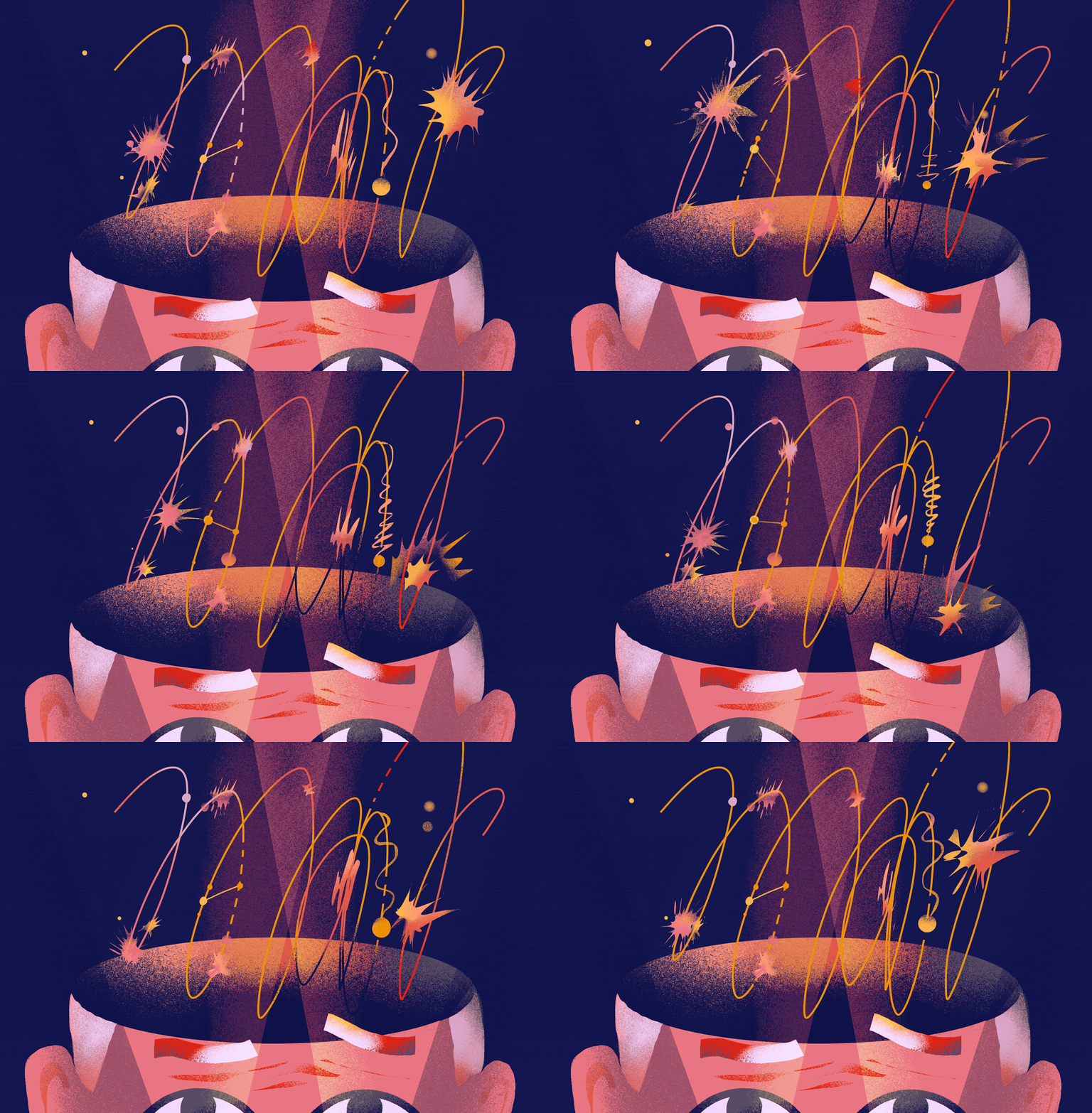
Illustration by Olga Aleksandrova
My mind is a whirlwind of thoughts racing at lightning speed, each clamoring for attention and demanding immediate action. The chaos they cause is paralyzing, like a traffic jam where nothing moves, and everything seems urgent. I try to gather my thoughts and get started with the task at hand, but my brain feels foggy, and I can't decide where to start and what to do.
Welcome to executive dysfunction, where the ADHD brain turns simple tasks into monumental difficulties. One minute, you have everything under control, and then you're veering off course despite knowing where you need to go.
I assumed this was a universal experience — a mind oscillating between frantic mental activity punctuated by episodes of total cognitive freeze. But that's the challenge with mental health; our inner worlds are invisible, leaving others unaware of our true experiences.
Growing up in the '80s, ADHD was an unfamiliar concept, especially for girls. Back then, it was seen as something only hyperactive, rowdy little boys had, the kind who couldn't sit still in class. But, despite my intelligence, I was often labeled difficult and easily distracted. My mum discussed my behavior with me, and I tried to explain my inner turmoil. She assured me it was normal and that everyone felt the same way.
The irony is she probably did feel the same way. "I see many parents seeking ADHD evaluations after their children are diagnosed. Once they learn about ADHD, they realize they might share similar traits," said Dr. Paul Losoff, clinical psychologist at the Bedrock Psychology Group.
This pattern is reflected in broader statistics, with research from 2019 estimating that ADHD affects almost 1% or 3.2 million adults in the USA. However, fewer than 1 in 5 adults with ADHD are diagnosed.
It wasn't until decades later, scrolling through the modern-day oracle of TikTok, that I began noticing videos that perfectly encapsulated my experience. A thought began to form: Could I have ADHD?
Unraveling the beautiful chaos
Pursuing a diagnosis for ADHD is a profoundly personal decision, often stemming from a desire for clarity and self-awareness. "There are several benefits to having an ADHD diagnosis," said Gabrielle Morse, Psychotherapist at Noetic Therapy. "It can help you understand yourself better, which can ultimately lead to greater self-acceptance."
Losoff added, "For some, an ADHD diagnosis is profoundly validating. ADHD can erode self-esteem due to chronic negative feedback about behavior. They may have felt they had to work twice as hard as others to achieve the same results, and now understand why."
Iveta Pudilova, CEO and co-founder at Happy Autistic Lady, agreed, adding that it allows access to professional support, including therapy, financial aid, and medication. "It may also be easier to access educational and workplace adjustments."
She noted, however, that an official diagnosis isn't always necessary. "Self-diagnosis is completely valid and still gives you the legal right to access support."
Morganne Crouser, Clinical Director at Adult Autism Assessment, echoed this sentiment. "Consider if a diagnosis would be useful to you. What, if anything, would a formal diagnosis provide?" she said. "A formal diagnosis can be a game changer for some folks, but other folks can access everything they need without it."
I decided to pursue a diagnosis. Why? With its potential to dull my cherished hyperfocus, medication held no appeal. And as I work for myself, I need no work or education provisions. Instead, the motivation came from a place of validation and I opted for an affordable online platform to uncover the truth.

“I'd always felt like an outlier in the neurotypical world but never quite understood why.”
Illustration by Jon McCormack
Validation through digital diagnosis
Choosing ADHD online for my assessment made sense for two key reasons. First, it was under $200, making it significantly cheaper than other options. Second, it was questionnaire-based, sparing me from an exhausting and nerve-racking psychologist visit.
Pudilova highlighted the flaws of a traditional diagnosis, noting it can be long, expensive, and emotionally taxing. She stated, "The process itself is quite inaccessible and triggering for many," as it focuses on the negatives of ADHD, requiring a detailed account of your struggles.
So, I logged on and answered a slew of questions designed to evaluate attention span, hyperactivity, impulsiveness, and other traits, and in 48 hours, I had my diagnosis: ADHD, predominantly inattentive type. I felt a strange sense of elation and relief as all the puzzle pieces clicked into place.
Despite its convenience, this method had its drawbacks. Its impersonal nature meant no professional was there to probe deeper into my responses or catch any inconsistencies. Losoff explained, "While there's debate about the best diagnostic process, most experts agree a thorough interview is crucial to gather a comprehensive history of behaviors and symptoms," underscoring the limitations of the format.
Crouser added that because many diagnoses also include issues with executive functioning, it’s essential that a clinician rule out any other possible reasons for your symptoms. She explained, "There are many diagnoses and life events that can cause forgetfulness, distractibility, and impulsive behaviors. For example, all of those symptoms can also come from trauma." She advises, "Choose a diagnostician you trust, and be open and honest with them."
If you're questioning whether you have ADHD, carefully consider your next move. Would you prefer an official diagnosis? If so, what's the best approach?

Optimizing life with ADHD
Living with ADHD can be challenging, so you need to find strategies that work for your lifestyle. Pudilova said, "Everyone has unique needs, so the best advice I can give is to try different things and see what works best."
Illustration by Jon McCormack
Whatever it is, the way you tell your story online can make all the difference. Crouser emphasized the importance of getting to know your brain and how it works best. "Track your natural rhythms and responses to different activities, times of day, and sensory experiences," she advised.
Staying organized is often a significant stumbling block for those with ADHD. Crouser suggested using one calendar, whether digital or paper and consistently tracking your schedule. "Using alarms and reminders for important tasks and appointments can be incredibly helpful," Pudilova added. Another trick is color-coding your calendar to better visualize your day’s structure.
Overwhelm and mental paralysis are significant issues in ADHD, and Pudilova recommended several strategies to manage these constraints effectively. Dividing large tasks into smaller, manageable steps can make them less daunting. Additionally, the Pomodoro Technique, which involves working in short, focused intervals followed by breaks, can enhance focus and keep track of task duration. Pudilova emphasized the value of a visual countdown, noting, "It’s a simple tool, but it has significantly improved my productivity and time awareness."
She also recommended noise-canceling headphones to block out background noise and improve concentration. Playing music can also help you transition smoothly between tasks, leveraging auditory cues to facilitate mental shifts.
Morse emphasized that while having tools is essential for getting things done, the impetus to use them is another thing altogether. "It's important to reconnect with your motivation and perhaps set up a reward for achieving desired behaviors," she suggested. "Ask yourself: How do I want to see myself? How will I feel after I do (X)?" This approach can help you stay focused and committed to your goals.
The ADHD brain has the potential for incredible focus and creativity. Embracing ADHD means finding what works best for you and leaning into your strengths so you see it as a positive, not a negative.
Zia Sherrell is a digital health journalist and content creator with over a decade of healthcare experience and a Master of Public Health. Her mission is to empower and educate people by bringing health matters to life with engaging, evidence-based writing. When she’s not typing madly, Zia enjoys travelling and chasing after her dogs.
your contribution is tax-deductible
KEEP EXPLORING:Shame to self-discovery: a mother-son ADHD story

Illustration by Annie B. McCall