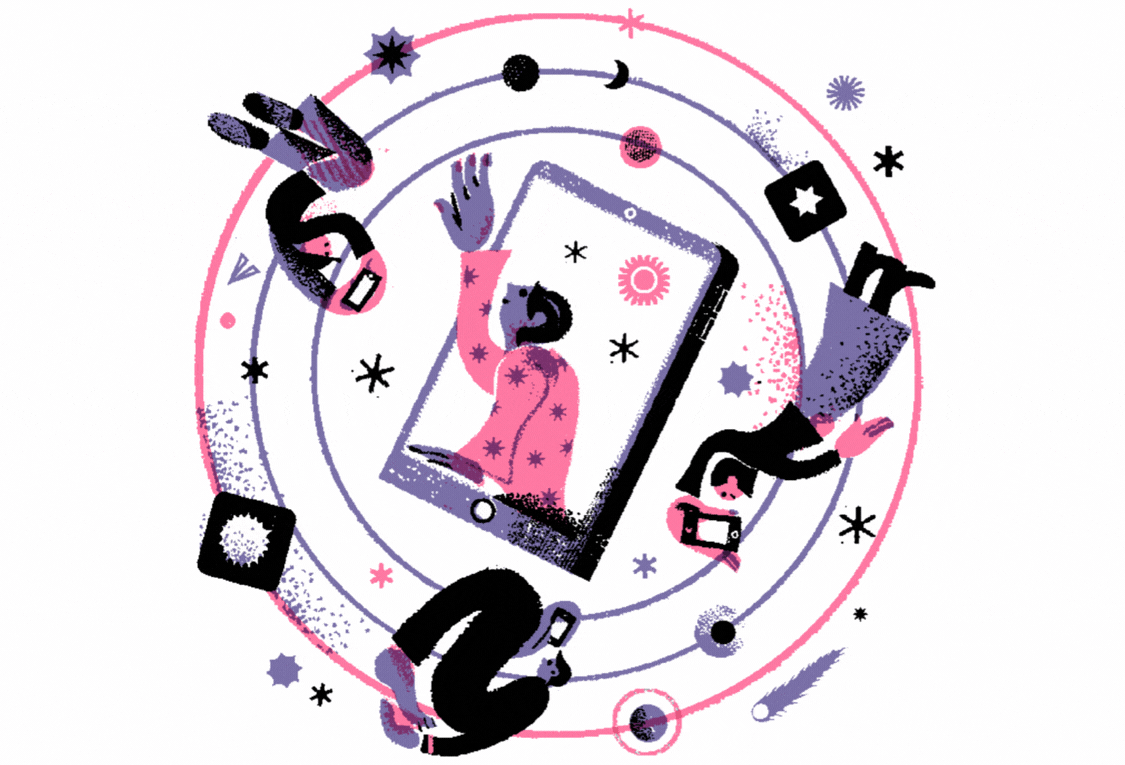
Illustrations by Maggie Stephenson
by Tammy Danan
Mistake is kind of a dirty word. If you’ve made one, no matter the degree, society often suggests the next step is a feeling of failure or unworthiness of support and care. Especially during young adulthood, when everyone has an opinion on what your success looks like, one wrong move can feel like a doom sentence. Chose the wrong college degree? What a waste of money. Resigned without another job lined up? What were you thinking? Relationship problems, financial woes, housing challenges? Cue the shame spiral.
The rigidness around making a mistake can be paralyzing, leading many teens and young adults to struggle with decision-making. So what if we could shift the mindset around what a mistake actually looks like and where to go next?
What if we viewed mistakes as perfect stepping stones into growth and resilience? Theoretically, if children grow up in a healthy environment where they are taught to be accountable for their mistakes, no matter how small, they’ll grow into responsible adults who don't fear trying and exploring the world. But how does that actually play out? In some cases, “mistakes” aren’t even actually mistakes. They’re just decisions and actions that don’t align with what society has fed us.
The person most often conjured when the word “genius” is thrown around, Albert Einstein, (maybe) said it best: “Anyone who has never made a mistake has never tried anything new.” Even if he didn’t say it, whoever did was onto something.
So, how can mistakes help us learn and grow into more well-rounded, responsible, and resilient people? How do mistakes and recovery from them affect our brain, and what does our childhood environment have to do with all this?
Welcoming mess as a part of growing up
Blunder, error, slip-up, miscalculation, gaffe. Merriam tells us the definition of mistake is to blunder in choice, to misunderstand meaning or intention, to make a wrong judgment of character or ability, to identify wrongly, to be wrong. The root cause, however, is far more nuanced. Let’s look at the science of making mistakes as part of growing up.
Clinical child and adolescent psychologist Emily Hanlon explains that adolescence is “one of the most neurologically active periods of a person's life.” The founder of The Playful Psychologist explains that the brain is still developing during this time, and the prefrontal cortex (responsible for decision-making, impulse control, and emotional regulation) is not fully developed until around age 25. Mistakes are inevitable for young people (and really, anyone of any age).
Educator, clinical supervisor, and occupational therapist Melody Joy Palma, who works with young people ages 6-15, says the teenage years and young adulthood are a time for “making mistakes” and “learning your own boundaries.” She adds that this is when young people slowly create a map in their brains to determine what they did right, what they did wrong, and what the consequences were, so they can decide for themselves what they should and shouldn’t repeat next time. Hanlon refers to this as “consequence mapping,” and suggests this will inspire better decisions as they grow into adulthood.
Childhood environment impact on perception of mistakes
Sixteen-year-old Genesis reports that making mistakes often makes him feel sad and guilty “...because if I make a mistake, it’s my fault.” When asked if he thinks making mistakes is bad or wrong, Genesis says, “not necessarily… because mistakes can help you grow [when you] learn from them.”
Childhood looks different for everyone. Some grow up in households where perfectionism is praised, and mistakes are met with criticism. When “screwing up” equates to feelings of being unworthy and unlovable, Hanlon says this could lead young people to think all mistakes are inherently dangerous. “Their nervous system begins to associate error with threat, and over time they develop elaborate strategies to avoid that threat,” she says. This kind of environment and line of thinking can lead many young teens to develop people-pleasing tendencies, avoidance, and a perfectionist mindset.
“What looks like laziness or lack of ambition in a teenager is often a very logical response to an environment that taught them their worth was conditional on getting things right,” Hanlon explains.
“The hardest part about this is that the very thing meant to motivate them (high standards, critical feedback) often produces the opposite: a young person too afraid to try.”
Illustration by Maggie Stephenson
Neurological effects of making mistakes (and how to recover)
Neural feedback responses to errors are a teaching signal for the motor learning system. That means errors (aka mistakes) are key to neuroplasticity, which is how we learn and grow. Kendra Cherry, MSEd explains that neuroplasticity is an umbrella term referring to the brain's ability to change, reorganize, or grow neural networks, which can involve functional changes due to brain damage or structural changes due to learning.
In Neuroplastic parenting, Annette Walters writes, “Instead of guardrails put up by others, we’re making an expanding space for understanding and connection—with each other, with the outside world, and maybe most importantly, with ourselves.”
Hanlon says that when we make a mistake, “our brain fires two distinct signals.” She explains that the first signal is an alarm. The second signal, which is more common in people with a growth mindset, is a “slower, deeper signal associated with attention and learning.”
With chronic shame resulting from negative responses to mistakes, your amygdala launches into fight-or-flight, your cortisol can spike, and your prefrontal (cortex) can shut down – all of which can prevent healing and learning, leaving a person stuck. It’s essential to remember that the prefrontal cortex – again, not fully developed until around age 25 – “can be exquisitely sensitive to even temporary everyday anxieties and worries.”
This is where mindset becomes biology. Research on growth mindset shows that how we interpret a mistake changes what the brain does next. And that interpretation is shaped, in large part, by the responses we've received over time. Hanlon adds, “People with a growth mindset actually show more brain activity after making a mistake because their brains are engaged in processing and learning from it,” she says. However, for people who receive negative feedback about all mistakes, their brains essentially shut down and enter “self-protection mode.”
“When recovery from a mistake involves acknowledgment, self-compassion, and repair, it activates the brain’s reward and learning circuits,” explains Hanlon. She adds how it releases dopamine and strengthens neural pathways associated with resilience and flexible thinking. The repetition of healthy exposure to mistakes, and to practicing a positive way to recover from them, helps make young adults “more grounded and more secure towards themselves,” Palma says. “They’re more willing to take calculated risks and try new things out.”
Coping mechanisms, for better and worse
Let’s also acknowledge that we’re all just humans, after all. Sometimes, we simply do the wrong thing or make the wrong choice, even while believing the path we’re choosing is helping us. Unhealthy coping mechanisms towards making mistakes can develop at any age, but young people are especially susceptible. This might include perfectionism, avoidance, people-pleasing, externalizing blame, catastrophizing, and emotional numbing or withdrawal. Hanlon shares examples:
Perfectionism = If I never finish, I can never fail.
Avoidance = If I simply don’t try things that carry risk, I am safe.
People-pleasing = I will make sure everyone around me is happy so there's no room for criticism.
Externalizing blame = It's never my fault because fault feels unbearable.
Catastrophizing = One mistake means everything is ruined.
She adds that “these patterns can be particularly pronounced” in young people with ADHD because, “their nervous systems are already working harder to regulate, and mistakes can feel disproportionately activating.”
From Shame to Self-Discovery, “One special trait of ADHD can be Rejection Sensitive Dysphoria. Essentially, it ‘is when you experience severe emotional pain because of a failure or feeling rejected. This condition is linked to ADHD, and experts suspect it happens due to differences in brain structure. Those differences mean your brain can’t regulate rejection-related emotions and behaviors, making them much more intense.’” But these feelings can happen for all people and all types of brains.
Rumination can also develop, creating intrusive thought patterns such as, “I continue making mistakes, so I am a failure.” Palma adds that this could also lead young people to shrink. “Instead of having secure attachments towards themselves and having thoughts like,‘even if I fail, I am still worthy,’ these young folks have the tendency to go back to their earliest childhood and the feelings they developed back then when they make a mistake.”
Unhealthy coping mechanisms are repeated instead of corrected, they can continue to negatively impact a person as they grow, leading, Palma says, to people “becoming less open to their emotions” or even “self-abandon[ing] just to save themselves from making mistakes.”
“Perfectionism means you only ever operate in your comfort zone, so you never discover what you're actually capable of. Avoidance means your world gets progressively smaller as the list of things you won't risk grows longer,” says Hanlon. “People-pleasing erodes identity over time as you become so focused on managing others' perceptions that you lose track of who you actually are. And externalizing blame damages relationships and blocks genuine intimacy, because accountability is the foundation of trust.”
How can we reframe our mindset around mistakes?
If you're growing up with an unhealthy relationship with mistakes, you're not doomed.
Palma says there are many different root causes why a person reacts to mistakes the way they do. And while things like journaling, deep breathing, and improving self-awareness can all help, “the best approach is to heal yourself, learn your triggers, and learn the root causes of why you struggle to be accountable,” she says. This journey could also involve various types of expert-led therapy.

Hanlon’s number one advice is to normalize the neuroscience: “Teach them what happens in the brain when we make mistakes. When young people understand that their shame response is a learned neurological pattern rather than the truth about who they are, it creates just enough distance to respond differently.”
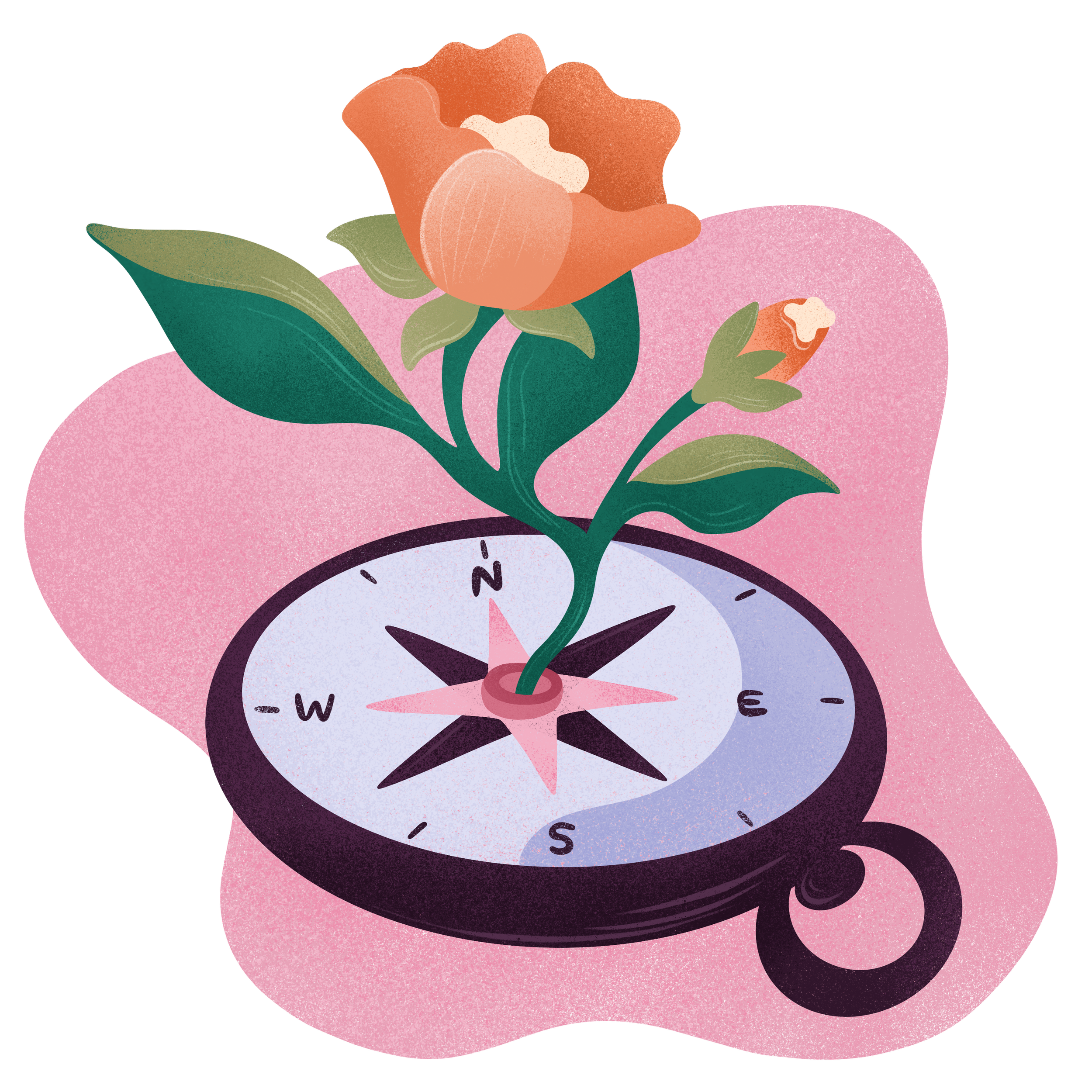
Illustration by Maggie Stephenson
Parents and peers can model repair. Hanlon says, “When adults acknowledge their own mistakes openly, and without excessive self-flagellation, it gives young people a template for how to do the same.”
Other reframing techniques include introducing and teaching self-compassion as well as validating feelings before redirecting. For parents, lines like, “Of course that felt awful,” before suggesting any correction or advice can greatly help shift a child’s mindset and help them understand their feelings are valid even when they made a mistake.
Walters writes, “We grow from a place of trust, self-awareness, and openness. I’ve learned that how we perceive the world around us – and how we choose to interpret our children’s behaviors – is as much a reflection of our own minds as it is of theirs. By reshaping how I view myself as a parent and how I view them, we’ve all learned to better regulate our emotions and behaviors in healthier, more compassionate ways.”
Healing takes time
Patience is power. Whether you’re a parent who wants to teach your kids how they can better approach mistakes, or you’re a young adult feeling unhappy with how you’re currently handling mistakes, it’s important to remember that learning all this requires dedication and time. And shame, which tends to be closely knitted with making a mistake, slows progress. “If left unaddressed, shame tells a person that they are the mistake, not that they made one,” says Hanlon, adding that when this belief is carried into adulthood, it will “quietly shape every relationship, every career decision, and every moment of self-talk.”
Reframing can be helpful. “I own my mistakes,” Genesis says when asked about what it looks like when you stop deflecting and instead continue working to improve, even if it’s hard. He adds, “Like when I do the grocery shopping, and choose the wrong brand, I’ll just own that and know next time, choose the other brand.”
Hanlon adds, “Without mistakes, young people don't develop resilience; they develop performance.” Genesis is only 16 years old, so he’s got a lot more to deal with and learn about as he grows.
Tammy Danan is a freelance journalist reporting on environmental and social issues. She's the founder of Moss Content Studio, a boutique agency focused on long-form storytelling, and a creative content writer who covers film & photography, creative pursuits, and the future of work, and how these overlap with our everyday lives.
Maggie Stephenson is an illustrator whose work explores the connection between nature, health, and wellness. Her illustrations inspire balance and harmony in everyday life.
KEEP EXPLORING: