
Gratitude in the micro-moments: Rewiring the brain for resilience

Life often feels like a series of grand milestones—graduations, promotions, weddings, and other significant events that we look forward to and celebrate. But it is in the quiet, seemingly insignificant moments that gratitude often finds its deepest roots. These small moments, fleeting and unassuming, have the power to transform our perspective, especially during times of struggle. One such moment reshaped my understanding of gratitude during a particularly challenging period in my life.
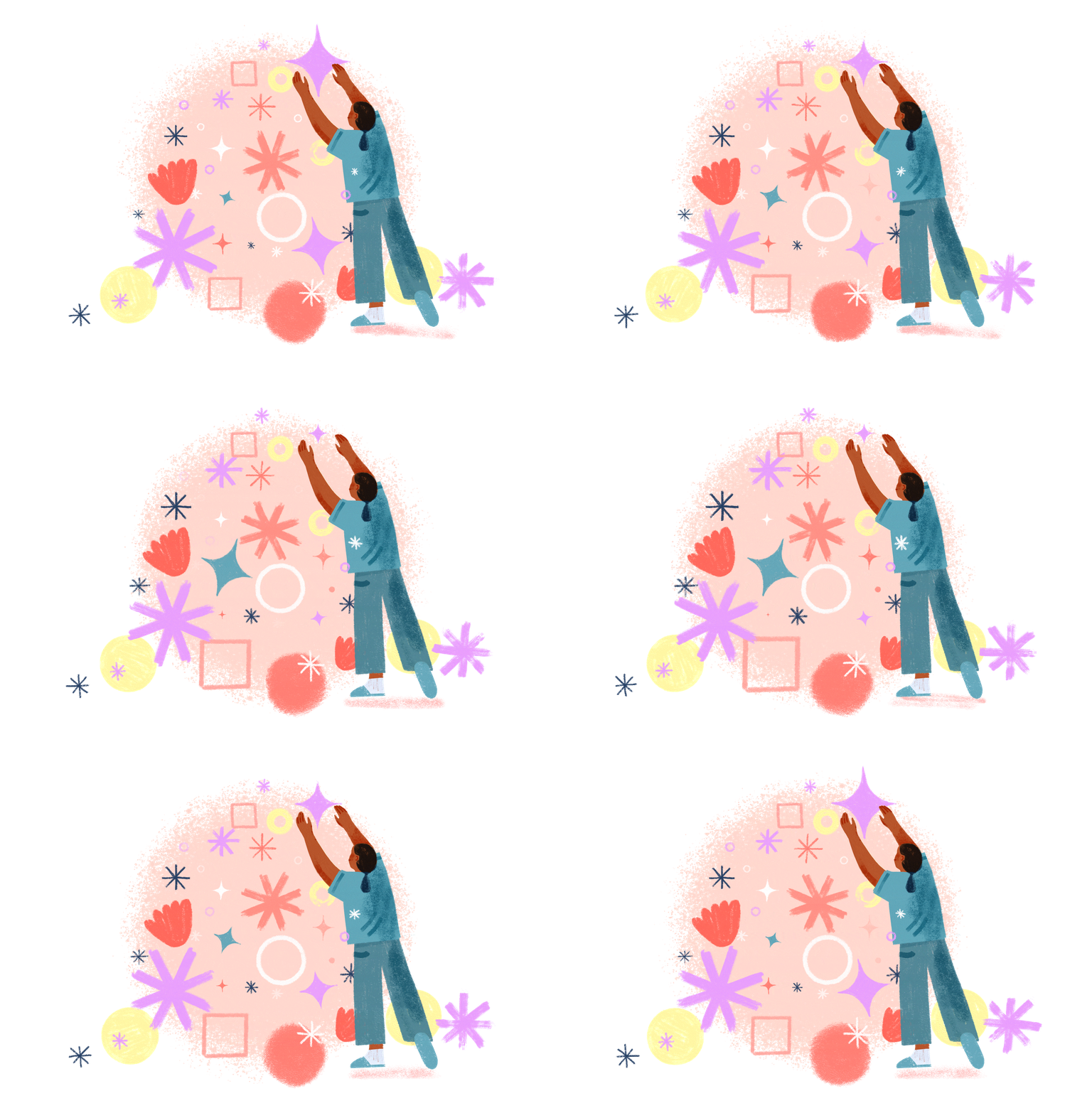
A moment of awe
Alissa Thaler
It was a crisp December morning, and I was walking through the hospital corridors, weighed down by a cloud of career-related anxiety. As a doctor, I had always found purpose in helping others, but the relentless demands of the profession had left me questioning my path. The long hours, the emotional toll, and the pressure to make life-altering decisions in an overburdened healthcare system had begun to erode my sense of fulfillment. I felt disconnected, not only from my work but also from the very essence of why I had chosen this career in the first place.
Then, I saw a little girl, no more than a year old, toddling down the hallway with her mother. It took me a moment to recognize her, but then it hit me: This was the baby I had helped deliver a year ago. I remembered the urgency of that night, the collective effort of the medical team, and the overwhelming relief when her first cry filled the hospital room with life. At the time, the delivery had been just another shift, another patient, another routine moment in the demanding rhythm of my medical career. But now, I found myself face-to-face with that same child, now wide-eyed, laughing, and full of vitality.
Standing there, watching that child—a life I had helped bring into the world—something inside me shifted. The weight of my doubts momentarily lifted, replaced by an overwhelming sense of gratitude. Here was proof, tangible and irrefutable, that my work mattered, that even in the chaos of my own uncertainty, I had played a role in something greater than myself. I was reminded of the profound interconnectedness of life—how my actions, however small they felt in the grand scheme, had contributed to this child’s existence.
It was in this little moment of awe that I understood gratitude in a new way. It wasn't about grand achievements or major life events. It was about the quiet, often overlooked details—moments of connection, of presence, of noticing.
The science of gratitude in small details
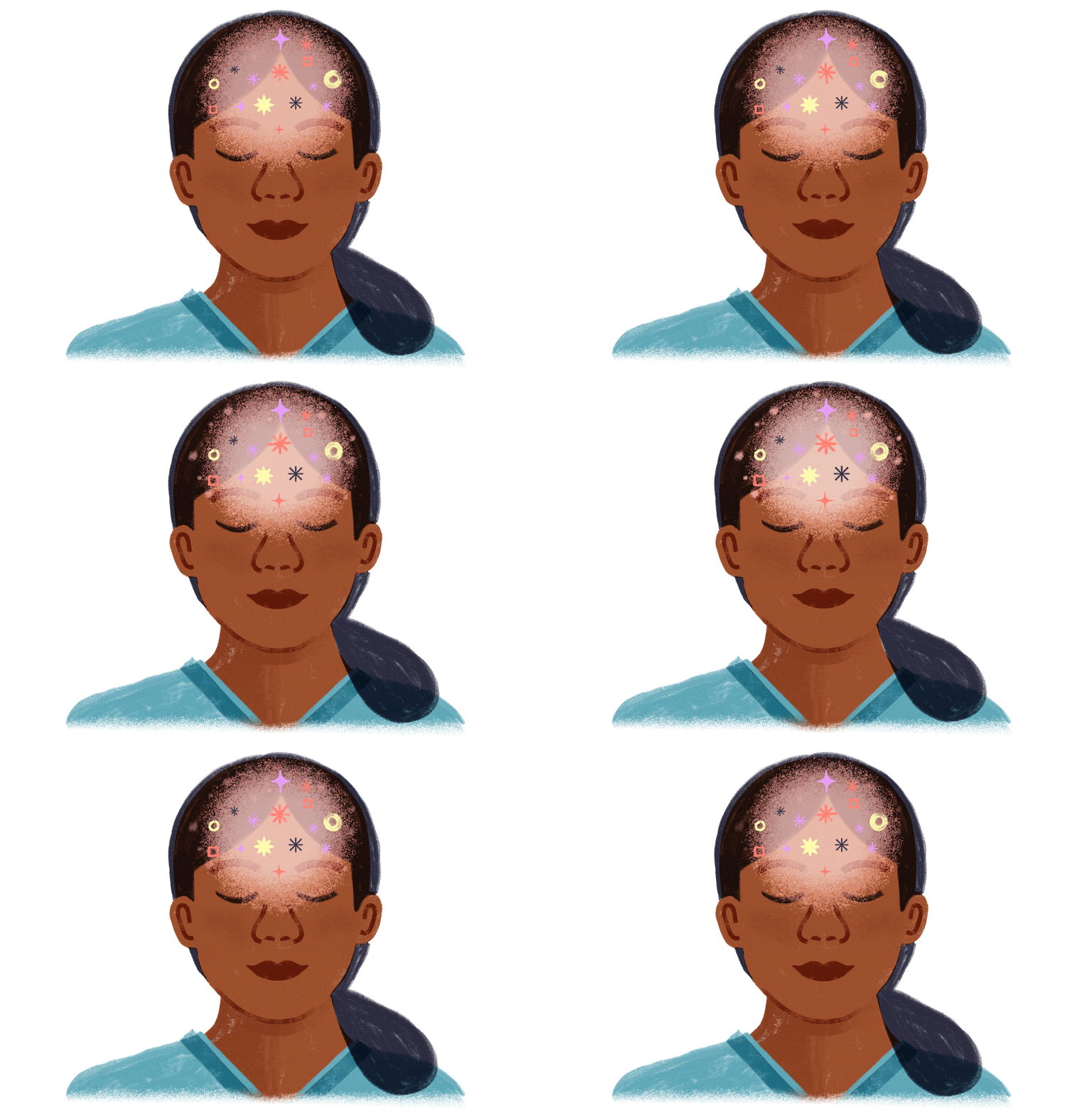
Gratitude has a significant impact on our brain, directly influencing both emotional well-being and mental health. Studies have shown that expressing gratitude activates the brain's reward centers, notably the prefrontal cortex, an area crucial for emotion regulation and decision-making. This activation is primarily driven by the release of dopamine and serotonin, neurotransmitters associated with happiness and contentment. By regularly practicing gratitude, these positive neural responses are reinforced, fostering a lasting sense of well-being. With time, gratitude can effectively “rewire” the brain, reinforcing neural pathways that encourage us to focus on positive experiences instead of negative ones. While this transformation isn’t immediate, consistently practicing gratitude can help us navigate challenges with greater resilience and foster a more optimistic outlook.
Research has also shown that activating the brain’s reward centers through gratitude can improve motivation—a particularly valuable benefit for people struggling with depression or anxiety, conditions frequently marked by a lack of motivation. Furthermore, gratitude counteracts the negative cognitive bias commonly associated with these conditions by amplifying positive experiences. This shift not only uplifts mood but also fosters a more balanced and hopeful outlook on life.
Mindfulness plays a crucial role in this process. When we pause to notice the small wonders around us—the way sunlight filters through leaves, the sound of birdsong, or the unexpected kindness of a stranger—we engage these neural pathways. These moments, when noticed and appreciated, create a feedback loop in the brain, reinforcing a sense of gratitude and contentment.
Cultivating Gratitude in Everyday Life
The challenge, of course, is how to sustain this sense of gratitude, especially when life feels overwhelming. Two practices have been particularly transformative in anchoring me to the present and helping me notice the beauty in the small things.
Nature journaling is a simple yet powerful way to connect with the world around us. This practice not only deepens our appreciation for nature but also grounds us in the present moment. On days when I feel disconnected, I take a few minutes to sit outside and jot down what I see. It’s astonishing how quickly this act of observation can shift my mood and reignite a sense of wonder.
Micro-meditations, on the other hand, are brief moments of mindfulness that can be practiced anywhere, anytime. These might involve taking three deep breaths before starting a task, pausing to savor the taste of a meal, or simply closing your eyes and listening to the sounds around you. The key is to make these moments intentional, no matter how brief they may be. Over time, these small acts of mindfulness accumulate, creating a reservoir of gratitude that can sustain us through difficult times.
For me, that experience was a call to look beyond the stress and unpredictability of my career, to see the countless instances of connection and impact that I had once overlooked. Ultimately, it is in these moments that gratitude becomes a powerful tool for resilience—an anchor that steadies us in the midst of life’s challenges.
Dr. Modupe Abidakun is a Nigerian physician and writer, reporting across the health, wellness and lifestyle genres.
Alissa Thaler is a UK-based illustrator and animator with over a decade of experience creating impactful visuals for books, magazines, medical journals, and NGOs.