Illustrations by Alex Holmes
The number of films depicting mental illness has increased every year since 1977. And these films consistently receive Academy Award nominations and wins, grossing more at the box office than films about other topics every year except one since that same year. The most common theme illuminated among these kinds of movies was suicide, highlighting the need for careful, accurate, and empathetic portrayal of these delicate stories.
Coined in 1990 by L. Berg-Cross, P. Jennings, and R. Baruch, the term cinema therapy delineates a therapeutic approach where therapists curate films tailored to the specific needs and concerns of individuals undergoing treatment. These selected movies should be watched either independently or in the company of designated individuals as part of the therapeutic process.
Insights From Therapists

Saba Harouni Lurie, a trauma therapist, suggests resonant viewing to clients. HBO’s 2020 series, I May Destroy You, tells the story of a character (played by co-director Michaela Coel) who experiences sexual assault in a nightclub. "Watching films or television shows that depict an individual surviving trauma can help those who have experienced trauma increase compassion for themselves, better understand their experience, and offer a reminder that they are not alone in their experiences,” said Lurie.
Observing a mirror image on the screen of someone going through something similar to what the viewer has experienced can spark an undeniable connection. Lurie explained, "Seeing characters have similar experiences, having compassion for them, acknowledging that they were in no way at fault for being sexually assaulted, and seeing how they struggled after the assaults helped my clients better understand and have compassion for themselves, too.”
Jessica Plonchak, clinical director of ChoicePoint Health, noticed that patients often do connect to films and television shows, but notes that substance dependence can often be romanticized and glamorized on the silver screen. "One exception is the show Euphoria, which presents a realistic portrayal of substance abuse and mental illness in teens. I feel like they have done a good job of creating awareness among the audience that substance abuse is not sexy and it turns your life into a living hell," Plonchak said.
Identification with certain characters can be strong, powerful, and moving, especially when loved ones cannot fully understand, support, and empathize.
Illuminating Hope
Filmmaker and hypnotherapist Jacqui Blue deeply understands the subconscious mind and how that plays out in life. Her film, I Chose Life: Stories of Suicide and Survival, released May 7, 2020, illustrates stories of survivors, families of fallen victims, and first responders and activists dealing with suicide. As Blue explained to Film Inquiry, she wanted to “cover multiple aspects” and “make a universal film.”
The film aimed to help viewers understand deeply, almost on a cellular level, what living with suicidal thoughts is like, even for those who have no real handle on the subject. "I knew I wanted to make an impact. I wanted people who had never been suicidal to understand from the perspective of those who had,” Blue said. “And I wanted to give a voice to people who lost their lives to suicide through their loved ones sharing their story.”
During and after the extensive research and in-depth interviews conducted for the film, Blue received hundreds of messages of gratitude for illuminating stories that most people “are afraid to touch.” People find talking about suicide difficult because shame often shows up right alongside it.
The aphorism, shame dies in the light, is incredibly apt. “Sharing stories saves lives. I learned this with my film, and it affected the way I wanted to present my film; I didn't want to make a doom and gloom film but one that inspired hope and optimism,” Blue shared.
Watching a show parallels being in a hypnotic trance, especially when deeply involved in the storyline, according to the hypnotherapist and filmmaker. Challenging themes like suicide cannot be tied in a nice, neat bow. Yet, through film and TV, we can access the deepest part of ourselves, the subtleties that linger beneath the surface, and start to bring those to light.
Lessons in Resilience

L.E. Wilson, who writes a newsletter called Moviewise, noticed that films could teach viewers lessons, almost like a primal scream—deep, profound, and cathartic. A well-known movie, Wilson said, portrays the character’s perseverance throughout the narrative: Back to the Future; another example is Pixar’s 2003 Boundin’. “This short set to music about the emotional ups and downs of a lamb is a sophisticated tutorial in stoic resiliency,” Wilson described.
Copywriter Aaron Wertheimer talked about his experience as a viewer of the 1997 classic Good Will Hunting with Matt Damon, Ben Affleck, and Robin Williams. “There's a scene where Robin Williams places his hands on Matt Damon's shoulders and says, 'You're okay. You're okay. No, really. You're okay,' and Matt Damon breaks down crying as he finally lets go of the pain he's been holding on to throughout his life,” said Wertheimer, who was moved by the poignancy of the film.
A seventh-grade English teacher, Erin Beers, told me that she screens Wonder with her students. In it, the main character, born with facial differences, enters a mainstream school for the first time in fifth grade. Beers attested to its “profound impact on students' understanding of empathy and their relationships with one another.”
Reflection and Connection
Overall, cinema therapy can be very simple. If you want to try it yourself, watch one of these pieces or another of your choosing and ask yourself how you felt while watching. Did your breathing change during any parts? With whom did you most identify? Which part, if any, touched your spirit? What, if any, was your strongest emotion while viewing?
Cinema certainly has extraordinary therapeutic potential. Movies and television shows help foster connections to the story and others, offering a path to feeling uniquely understood. Taboo topics like shame, sexual assault, and suicide die in the light. Films can shine a light on our deepest struggles and challenges, bringing them from the subconscious to the forefront of our minds.
Jennifer Sakhnovsky is a science writer and editor in Chicago. Her work has been featured in WIRED, Popular Science, and Sierra Magazine.
your contribution is tax-deductible
KEEP EXPLORING:Cinematic stories can be great tools for connection and more
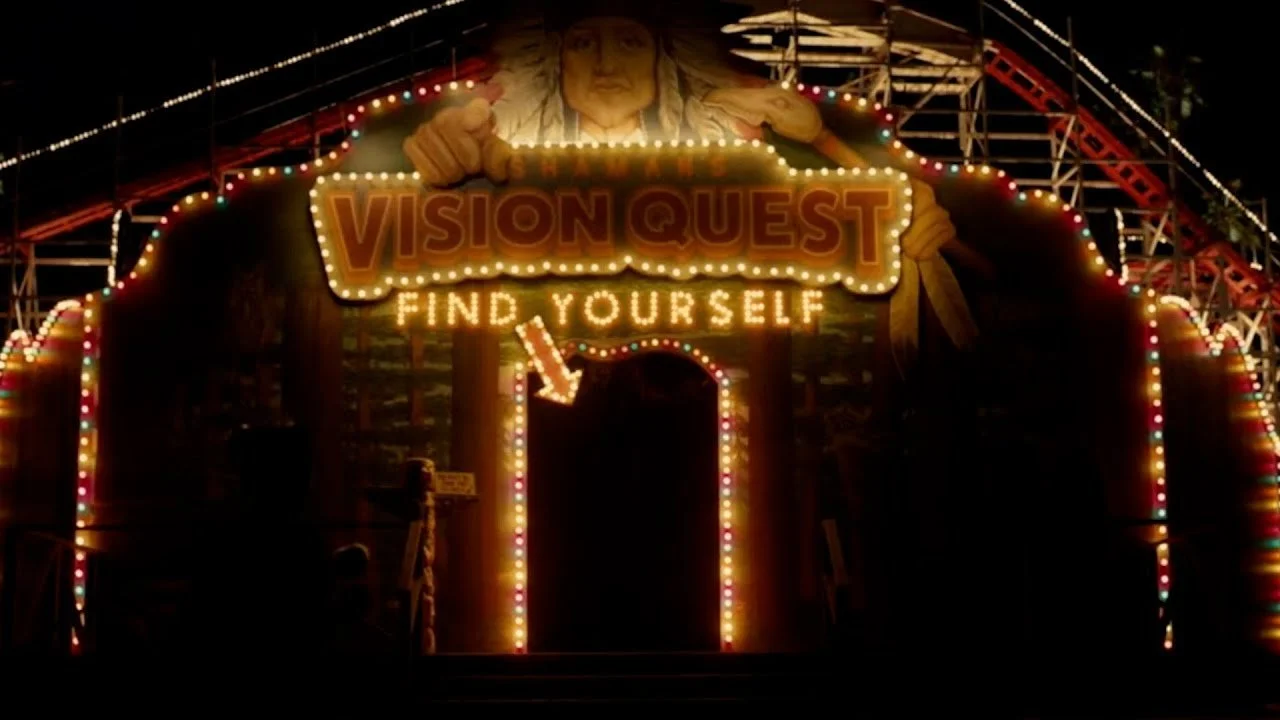
from Us by Jordan Peele